



















 Jan 20, 2026
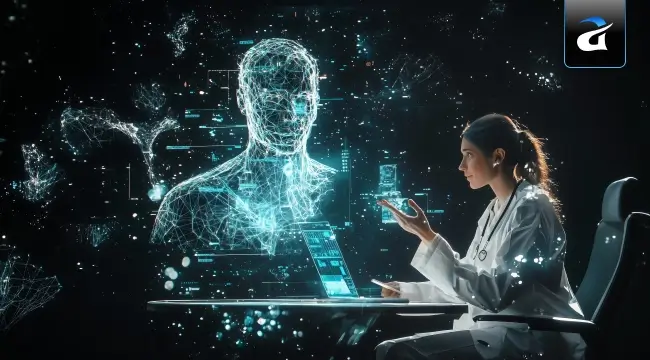
To resolve these challenges, Hybrid teams (AI Assistants and human expertise) have been introduced. This AI-Human collaboration brings creativity, saves time, and enhances decision making for businesses and IT workers, leading to enhanced projects and satisfied clients.
Let’s drill down into understanding how Hybrid teams are enhancing today’s work life in detail below!
What Are Hybrid Teams?
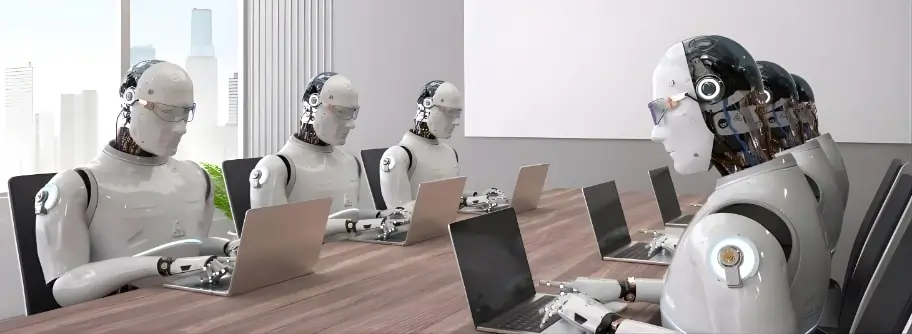
The combination of smart AI Agents and Assistants with human professionals make up a hybrid team. Here, humans and AI work together to create flawless projects, make smart strategies, and bring effective outcomes in a timely manner.AI Agents save time by doing repetitive tasks, analyzing reports and automating smaller tasks, while human professionals can focus on creating strategies and working on the core functions of a project.
Some examples of AI-Human collaboration are AI-Assisted Software development, Autonomous testing and AI tools for crafting emails, posts and videos.
AI Assistants in Hybrid Teams
AI assistants include tools powered by machine learning, natural language processing (NLP), and automation. These systems can:- Analyze large datasets in seconds.
- Generate insights and recommendations.
- Automate workflows.
- Assist with content creation, coding, customer support, and research.
Human Expertise in Hybrid Teams
Humans bring what AI cannot:- Contextual understanding.
- Emotional intelligence.
- Ethical reasoning.
- Creativity and innovation.
- Strategic decision-making.
Why Businesses and Tech Teams Are Adopting Hybrid Teams Faster Than Ever
Increasing Workload Without Increasing Headcount
Today, businesses seek to expand, but hiring many workers raises cost, onboarding time, and is hard to manage. So, AI-Assistants allow teams to tackle work without hiring further workers.AI-Assistants do repetitive tasks for you without mistakes. For example, Software developers let AI analyze code for mistakes, test codes and give suggestions, saving their time.
Slow Decision-Making
Humans cannot process too much data quickly, leading to slower decisions—but AI can do this within seconds. Hence, by analyzing data quickly, AI helps businesses make faster and more accurate decisions.For example, AI can analyze previous market or industry trends and suggest future customer demands.
Talent Shortages in Tech
In today’s competitive world, getting skilled developers, data analysts, and engineers has become hard. Hybrid teams resolve this issue by providing extra support from AI to humans. This AI support elevates human intelligence enough to handle difficult jobs.Pressure to Deliver Faster Results
From faster product launches to quicker customer responses, speed is now a competitive advantage. Hybrid teams significantly reduce turnaround time.Hybrid Teams in Marketing and Growth
AI assistants help businesses succeed in market growth by analyzing what strategies work and not work.AI in Marketing Tasks
- Keyword research and SEO optimization.
- Audience segmentation.
- Performance analytics.
- Content suggestions.
Human Role in Marketing
- Brand storytelling.
- Campaign creativity.
- Emotional messaging.
- Strategic positioning.
Hybrid Teams in Software Development and IT
Faster Development Cycles with AI-Assisted Coding
For tech professionals, hybrid teams are renewing software development.AI assistants can:
- Suggest code snippets.
- Identify vulnerabilities.
- Automate testing.
- Optimize performance.
- Architect systems.
- Ensure scalability.
- Make judgment calls.
- Maintain code integrity.
AI and Humans in IT Support and Maintenance
AI chatbots and monitoring systems handle routine IT issues, while human experts focus on difficult problems.This leads to:
- Reduced downtime.
- Faster issue resolution.
- Improved system reliability.
How Hybrid Teams Improve Decision-Making
Data-Driven Insights with Human Judgment
AI looks at past patterns to predict future trends, while humans can predict long-term impacts of decisions. When both strengths combine, better decisions can be made for the growth of your business.Example:
AI identifies a drop in customer engagement. Humans analyze why it matters, what caused it, and how to respond. This prevents reactive decisions and encourages strategic thinking.
Reduced Cognitive Load on Teams
By offloading analytical and repetitive tasks to AI assistants, humans experience less mental exhaustion. This improves:- Focus
- Creativity
- Problem-solving ability
Building Effective Hybrid Teams in Your Organization
Step 1: Identify Tasks Suitable for AI Assistants
Start with:- Repetitive tasks.
- Data-heavy processes.
- Rule-based workflows.
Step 2: Train Teams to Work with AI
Hybrid success depends on adoption. Train employees to:- Use AI tools effectively.
- Interpret AI outputs.
- Provide feedback to improve accuracy.
Step 3: Redefine Roles and Responsibilities
Shift human roles toward:- Strategy.
- Decision-making.
- Creativity.
- Relationship management.
Hybrid Working Tips for AI + Human Teams
Clearly Define Human vs AI Responsibilities
Be clear about which tasks AI should do for you. Give AI-Assistants tasks like data analysis, reporting, automation and research. While you can focus on making strategies, decisions, and managing projects altogether. This will avoid errors and confusion.Use AI as a Co-Worker, Not Just a Tool
Remember, AI is not your personal worker; it’s only an assistant. Hence, use it for small tasks like creating outlines for meeting, validating decisions and finding alternatives for problems—but don’t completely rely upon it.Keep Humans in the Decision Loop
While AI will provide you with insights and research, you should involve your own judgement, thoughts, and decisions.Standardize Hybrid Workflows
Make processes which repeat, where AI can create the first layer of work, and humans refine, approve, and execute.Train Teams on AI Collaboration
Hybrid success depends on skill, not just software. Train employees on how to prompt AI effectively, evaluate outputs, and improve results through feedback.By combining AI assistants with human expertise, businesses unlock productivity at a scale that was previously impossible. For tech professionals, hybrid teams offer an opportunity to focus on meaningful work while staying ahead in an AI-driven world. For more information, contact us.
Frequently Asked Questions
What is hybrid human AI?
It’s a fresh blend of people and smart machines to shape how work gets done when each play to their strengths. Here, AI processes information fast—spotting trends, running forecasts, and doing routine steps. Whereas humans bring insight, moral choices, original ideas, and real live awareness. This collaboration sharpens project results, boost precision, and makes quicker calls.
Can AI and humans work together?
Teamwork between people and artificial intelligence often brings the best results. When machines handle heavy data tasks, fewer mistakes happen. People set directions, watch progress, and give context. Machines spot hidden patterns and future trends, helping businesses align with the latest trends.
What is a hybrid expert system in AI?
A hybrid expert system in AI mixes AI techniques (like Rule-based reasoning) with machine learning or expert knowledge. This combination allows hybrid systems to find patterns, predict future trends, and keep improving with new data.
What is an example of hybrid AI?
For example, an AI chatbot handles online customer queries and guides them, while human workers take charge of customers in the physical store.
What are the examples of hybrid technology?
Examples of hybrid technology include AI-assisted software development tools, autonomous vehicles with human override systems, smart healthcare diagnostics combining AI analysis with doctor validation, and fraud detection systems where AI flags suspicious activity for human review. These technologies rely on both automation and human intelligence to deliver safer, faster, and more effective results.

