



















 Jan 16, 2026
IoT solutions play a vital role in tackling daily hustles, from smart homes adapting modern lifestyle to cities that manage traffic, public safety and energy smartly—IoT solutions have become a necessity.
Let’s drill down into understanding the best IoT solutions for your home and city, how it benefits you and the challenges you will face with them.
What Are IoT Solutions?
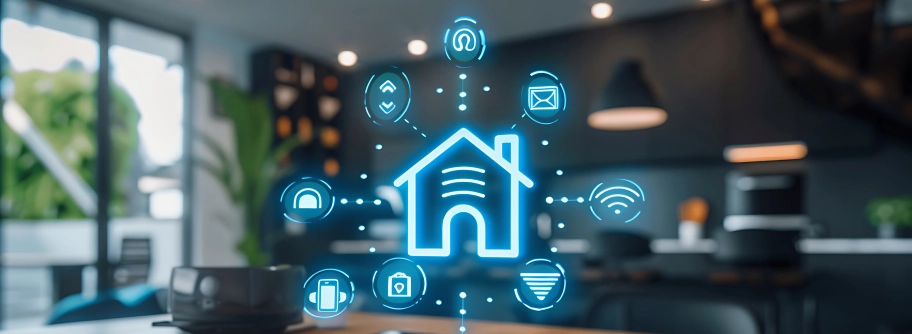
An IoT system means connecting your tangible devices (like, fridge, watch) to sensors, software and network to analyze and collect data, turning those devices into smart devices (like, smart fridge, smart watch).These devices collect data and send it to cloud platforms, then by using software, AI agents, and analytics they make smart decisions.
For example, a smart watch collects data via sensors, like your heart rate, then sends it to cloud platforms where a smart decision is made by AI and analytics. These smart decisions come to you in the form of daily alerts; calories burn and fitness goals.
Advance IoT Applications and Solutions for Smarter Homes
AI-Enhanced Smart Lighting Systems
These are IoT-based AI lighting systems that automate dim or high lighting based on the environment condition.These smart lights connect to the internet and utilize sensors to collect your home conditions. When someone enters or leaves a room, they automatically turn on and off. Moreover, they adjust the lighting of your home based on the brightness of daylight. The best part about this system is that you can control it via Voice Assistants (Siri, Alexa).
Next-Gen Smart Thermostats with Predictive Comfort
These Thermostats use AI and Machine learning algorithms to adjust the temperature of your home. These smart Thermostats consider weather conditions, sense whether someone is in a room and which corner of your home is being used more.Then, through small sensors in your home, this data is shared via Wi-Fi and smart networks to adjust home temperature accordingly.
How it helps:
- Your home temperature feels accurate.
- No need to change temperature manually.
- Less electricity is used, hence less bill.
- Sends maintenance alerts and warnings.
IoT-Based Home Security
The biggest concern of people is security. IoT solutions ease their fear with IoT powered cameras, smart locks, motion detecting, and door sensors that send direct alerts to their phone.For example, if someone enters your home in your absence, you will receive an instant alert on your phone. Today, advanced AI tools and IoT solutions can differentiate between humans, animals, and false alarms.
Energy Management and Efficiency
Smart meters and IoT energy systems can track your power consumption and spot any electricity wastage via sensors and cameras. This system automatically adjusts electricity, lights, and fans or sends an alert to homeowners.Hence, with IoT solutions, homeowners can keep track of power use and reduce electricity wastage, leading to low bills.
Advance IoT Applications and Solutions for Smarter Cities
Smart Traffic and Transportation Systems
Traffic is the greatest nuisance for citizens. So, with IoT-based systems, traffic can be controlled, leading to a smooth transport system.Traffic sensors and GPS-enabled public transport receive actual data regarding road conditions via smart signals. This data is analyzed by advanced algorithms, and a decision is made to control traffic smoothly.
For example, today smart cities reduce congestion by adjusting signal timings based on vehicle density.
Smart Energy and Utilities Management
Most cities face problems with balancing electricity as it must be produced and used simultaneously. If demand increases abruptly (for example, during hot weather when most air conditioners are used), the system can get overloaded. If demand is low (late at night), extra electricity gets wasted because it can’t be stored easily.This is where IoT-powered smart grids come in. They constantly monitor:
- How much electricity is being generated.
- Where it is being used the most.
- When demand goes up or down.
Public Safety and Surveillance
Public Safety and Surveillance ensure the safety of people in public places with smart technology.There are cameras and sensors in public places (like malls and parks) for monitoring. These devices are linked to the internet and send live data. AI systems monitor this data for abnormalities-if something is detected, instant alerts are sent.
This way, authorities can respond faster to accidents, crimes, or emergencies, reducing damages and saving time.
Environmental Monitoring
Air quality sensors, noise detectors, and weather monitoring systems help cities track environmental conditions in real time. This data supports better policy decisions and healthier living conditions for citizens.
Key Challenges in Implementing IoT Solutions
| Area | Challenge | How It Affects Users | Solution |
| Homes | Data Privacy & Security | Data from smart devices can be hacked. | Choose IoT platforms, strong with encryption and strong passwords. |
| Homes | Device Compatibility | Different systems refuse to work together, causing problems. | Choose IoT devices that align with your system. |
| Homes | High Initial Cost | Smart devices can be expensive. | Start with little devices and expand slowly. |
| Homes | Network Dependence | Slow internet can cause disruption in functionality of devices. | Have backup options in case of internet going down. |
| Cities | Infrastructure Readiness | Legacy infrastructure may not support advanced IoT systems. | Upgrade essential infrastructure in phases. |
| Cities | Data Overload | Managing huge data from sensors, cameras, and devices can be overwhelming. | Implement AI and analytics platforms to filter, process, and provide actionable insights. |
| Cities | Cybersecurity Risks | Public systems are vulnerable to attacks that can disrupt utilities, traffic, or safety services. | Use robust encryption, regular system audits, and cybersecurity best practices. |
| Cities | High Implementation Cost | Building a fully connected city requires substantial investment. | Start with high-impact projects (smart traffic, energy, waste management) and scale gradually; seek public-private partnerships. |
| Cities | Integration with Legacy Systems | Older city systems may not communicate with modern IoT devices. | Use middleware and standardized protocols to bridge old and new systems efficiently. |
Advantages of IoT Platform
An IoT platform is the backbone of any IoT ecosystem—it connects devices, collects data, and makes better decisions. Here are some of its advantages:Centralized Device Management
IoT platforms manage all connected devices via one dashboard. For smart homes, this means controlling lights, appliances, and security devices from one app. For smart cities, it helps authorities monitor traffic signals, energy grids, and public safety systems efficiently.Data Insights
IoT platforms collect data via sensors and give important insights regarding environments.Scalability
A good IoT platform can easily handle new devices or expanding applications. Smart homes can add new appliances, and cities can scale from a pilot project to a fully connected urban infrastructure.City Automation in IoT and Increased Efficiency
IoT platforms allow automation by using rules, AI, and analytics. For example, traffic can be controlled automatically by IoT based system in smart cities.Enhanced Security and Compliance
Modern IoT platforms include encryption and secure access controls preventing your data from getting hacked or leaked.IoT solutions are renewing the functioning of our homes and cities in the best way. From smart homes that reduce energy waste to cities that respond intelligently to real live challenges, IoT delivers immense value to people. Want to learn more? Contact us.
Frequently Asked Questions
What is an IoT-based smart home?
In an IoT-based smart home lighting, doors, and thermostats are connected to the internet and can communicate with another. They collect data via sensors and cameras and send it to software, AI, to decide, like, adjust lighting or temperature. You can control these devices with voice commands.
What is a common application of IoT in smart homes?
Home automation is the most common. This includes automated lighting and temperature. Here, lights and temperature will be automatically adjusted based on the presence of people and weather or environment conditions.
What is IoT in smart buildings?
IoT in smart buildings utilizes connected devices and sensors to monitor building systems (like lighting, heating, ventilation, security). This makes the building efficient, reduces costs, and improves safety.
What are the 4 types of IoT?
These types are Consumer IoT (devices for personal use like smart watch), Industrial IoT (used in factories), Enterprise IoT (used in businesses for operations and security), and Infrastructure IoT (for smart cities, energy grids and transport systems).
What are IoT smart devices?
Smart IoT devices can me everyday devices that connect to the internet, collect, send and act on data. For example, speakers, smart watches, refrigerators, and thermostats.

