













An online store can have excellent products, competitive prices, and an attractive website, yet still struggle to generate consistent sales. Often, the problem is not the products themselves but how easily potential customers can discover them online.
This is where e-commerce SEO services become valuable. E-commerce SEO helps businesses improve their visibility in search results, attract shoppers who are actively looking for their products, and create a smoother path from product discovery to purchase.
Whether a business sells clothing in Illinois, beauty products in California, a shoe store in Alabama, or home furnishings in Texas, a well-planned strategy can help connect its products with relevant customers. This guide explains how e-commerce SEO supports long-term organic sales and digital growth.
Aciano Technologies works with e-commerce businesses across the USA, from growing online shops in states like Alabama and Illinois to larger stores selling nationwide. The team combines SEO strategy with e-commerce website development and design, so your store is built to rank and turn visitors into customers.
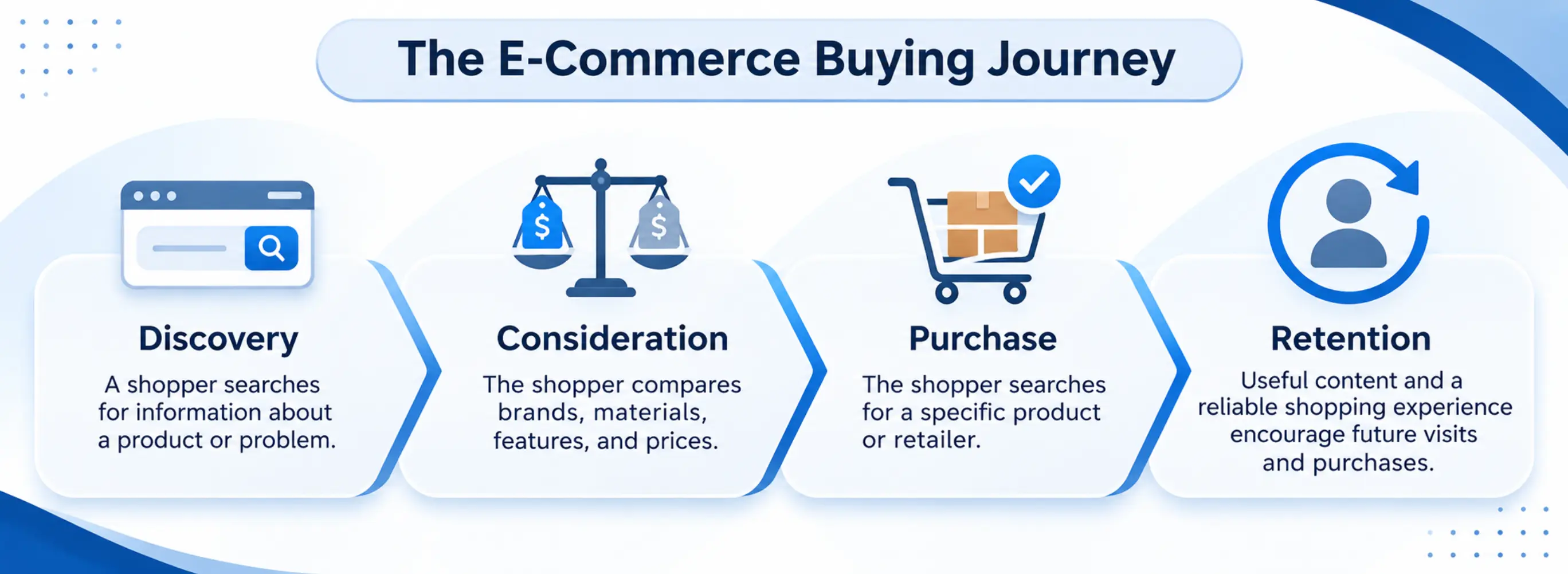
E-commerce SEO supports different stages of the buying journey:
Match keywords to the buying stage
A well-optimized product page should include:
We use product filters and high-quality images, visible calls to action, and secure payment options; every design element helps customers find what they need and purchase with confidence. We help e-commerce businesses reduce friction, improve the shopping experience, and increase conversion opportunities by combining user-focused design with website performance and SEO best practices.
Divide into the main category, subcategory, and then individual category. This structure makes browsing more intuitive and helps search engines discover the relationships between pages. Google's e-commerce documentation recommends linking from menus to categories, from categories to subcategories, and onward to individual products
Our team also regularly reviews and updates existing content to reflect changes in product availability, pricing, specifications, and seasonal trends, keeping your website accurate, relevant, and useful for both search engines and potential customers. These are some tiny steps that end up serving huge impacts.
We also create unique product content, implement secure checkout, set up Google Search Console and conversion tracking, and test redirects, canonical tags, and pagination to support better search visibility and a seamless shopping experience.
Focus on practical improvements such as:
Use canonical tags where appropriate, maintain consistent internal links, and ensure important pages can be crawled. Review pagination and filtered navigation carefully, so useful products remain discoverable without creating unnecessary crawl complexity.
Retailers should keep the markup consistent with the information customers actually see on the page. For stores selling products directly, Merchant Center product feeds can complement structured data and help Google understand product information.
Structured data does not guarantee rich results or higher rankings. Its purpose is to communicate product details accurately and support eligibility for relevant search features.
We are partners with multiple e-commerce businesses in the USA and are considered the most reliable e-commerce SEO company across all states. Our expertise can help identify technical problems, prioritize high-value pages, research competitors, improve content, and build a strategy around business objectives.
If you are looking for a reliable partner to support your e-commerce store’s digital growth, Aciano is the right choice because we offer:
Sources for Fact Check
This is where e-commerce SEO services become valuable. E-commerce SEO helps businesses improve their visibility in search results, attract shoppers who are actively looking for their products, and create a smoother path from product discovery to purchase.
Whether a business sells clothing in Illinois, beauty products in California, a shoe store in Alabama, or home furnishings in Texas, a well-planned strategy can help connect its products with relevant customers. This guide explains how e-commerce SEO supports long-term organic sales and digital growth.
Aciano Technologies works with e-commerce businesses across the USA, from growing online shops in states like Alabama and Illinois to larger stores selling nationwide. The team combines SEO strategy with e-commerce website development and design, so your store is built to rank and turn visitors into customers.
Key Takeaways
- Organic search brings in buyers who are already looking for what you sell, and the traffic keeps coming without a per-click bill.
- A solid site foundation sets the ceiling for your rankings. A weak site structure is hard to fix later.
- Usability and SEO are not separate jobs. Pages that are easy to use tend to rank and convert better.
- Product pages, category pages, and structured data deserve more attention than blog posts for most stores.
- Whether you hire in-house or bring in outside help, track revenue from organic traffic, not just rankings.
Understanding E-Commerce SEO and Its Business Value
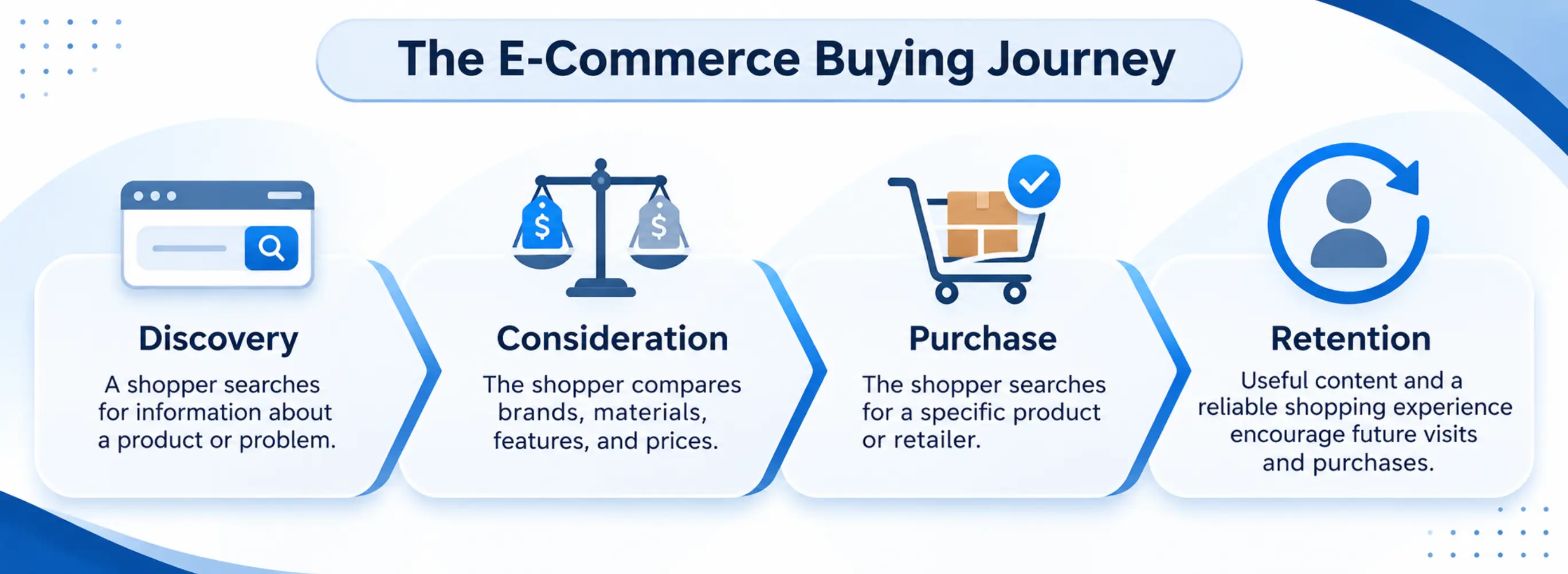
E-commerce SEO is the process of improving an online store so that search engines can discover, understand, and present its relevant pages to potential customers. It includes optimizing product descriptions, category pages, page titles, internal links, website performance, and other elements that affect search visibility and the shopping experience.E-commerce SEO supports different stages of the buying journey:
- Discovery: A shopper searches for information about a product or problem.
- Consideration: The shopper compares brands, materials, features, and prices.
- Purchase: The shopper searches for a specific product or retailer.
- Retention: Useful content and a reliable shopping experience encourage future visits and purchases.
Turning Search Visibility into E-Commerce Growth
Most online stores have a visibility problem and a conversion problem after clicking. That gap is exactly where our e-commerce SEO services experts spend their time. Our approach doesn’t stop at keywords and backlinks. We look at how the store is built, how shoppers move through it, and then fix those things together. Following Google’s guidelines, we invest in website development and design to create seamless shopping experiences that support search visibility and drive organic sales.Research Keywords with Buyer Intent
Keyword research helps retailers understand the words and phrases customers use when looking for products. The most valuable keywords are not always the ones with the highest search volume. A more specific search may attract fewer visitors but bring people closer to making a purchase.Match keywords to the buying stage
- Early stage: "how to choose a mattress" (best for guides and buying advice)
- Comparison stage: "memory foam vs hybrid mattress" (best for comparison pages)
- Purchase stage: "queen hybrid mattress free returns" (best for category and product pages)
Create Product Pages to Encourage Purchases
Product pages are often the destination for shoppers arriving from organic search. They should answer the customer's most important questions before the customer needs contact support. Each product page should have a clear title, a useful description, and information that distinguishes the product from alternatives.A well-optimized product page should include:
- Descriptive product name and page title.
- An original description based on genuine product features.
- High-quality images with meaningful alternative text.
- Current pricing, availability, and variant information.
- Clear shipping, returns, and warranty details where applicable.
- Customer reviews that provide genuine purchasing insights.
Use UI/UX for E-Commerce to Turn Visitors into Customers
Effective UI/UX for e-commerce plays a crucial role in turning website visitors into paying customers. We focus on creating intuitive navigation, responsive layouts, clear product displays, and a seamless checkout process that makes shopping easier across all devices.We use product filters and high-quality images, visible calls to action, and secure payment options; every design element helps customers find what they need and purchase with confidence. We help e-commerce businesses reduce friction, improve the shopping experience, and increase conversion opportunities by combining user-focused design with website performance and SEO best practices.
Build Category Pages and Internal Linking
Category pages are particularly valuable for searches that describe a product group rather than a specific item. A shopper searching for “organic skincare products” may want to explore several options before choosing a brand.Divide into the main category, subcategory, and then individual category. This structure makes browsing more intuitive and helps search engines discover the relationships between pages. Google's e-commerce documentation recommends linking from menus to categories, from categories to subcategories, and onward to individual products
Connect Content with Commercial Pages
We create a strategic content marketing approach that guides readers from informative buying guides to product comparison pages and relevant product listings. Ensuring every internal link adds value and aligns with the reader’s needs and search intent rather than simply promoting a sale is very important.Our team also regularly reviews and updates existing content to reflect changes in product availability, pricing, specifications, and seasonal trends, keeping your website accurate, relevant, and useful for both search engines and potential customers. These are some tiny steps that end up serving huge impacts.
Strengthen Technical SEO for E-Commerce Stores
Even well-written product pages may struggle to perform if search engines cannot crawl, render, or index them properly. Technical SEO helps address these issues and creates a more reliable foundation for organic growth.Build an SEO-Friendly E-Commerce Website
SEO is far easier when the site is built with it in mind. That's why e-commerce website development and SEO planning should happen in the same timeline. The best way is to build SEO-friendly e-commerce websites with a clear page hierarchy, optimized titles, headings, and URLs. We ensure important pages are crawlable and indexable, configure XML sitemaps and structured data, and optimize mobile performance, images, and Core Web Vitals. Google addresses the importance of such factors in detail.We also create unique product content, implement secure checkout, set up Google Search Console and conversion tracking, and test redirects, canonical tags, and pagination to support better search visibility and a seamless shopping experience.
Optimize Website Speed and Performance
Many customers browse online stores on their phones. If pages load slowly, images shift unexpectedly, or product filters are difficult to use, shoppers may leave before completing their purchase.Focus on practical improvements such as:
- Compressing product images without noticeably reducing quality.
- Removing unnecessary scripts and third-party tools.
- Using efficient hosting and caching where appropriate.
- Making navigation, filters, and checkout work on smaller screens.
- Monitoring Google's Core Web Vitals, including loading performance, responsiveness, and visual stability.
Manage Duplicate URLs and Product Variants
E-commerce platforms can generate many URLs through filters, sorting options, size selections, and color variations. Without proper management, search engines may encounter multiple URLs with substantially similar content. Google provides specific guidance on e-commerce URL structures.Use canonical tags where appropriate, maintain consistent internal links, and ensure important pages can be crawled. Review pagination and filtered navigation carefully, so useful products remain discoverable without creating unnecessary crawl complexity.
Add Product Structured Data
Structured data helps search engines interpret information on a page. For eligible product pages, good Product markup can make information such as price, availability, and review ratings eligible for enhanced search appearances.Retailers should keep the markup consistent with the information customers actually see on the page. For stores selling products directly, Merchant Center product feeds can complement structured data and help Google understand product information.
Structured data does not guarantee rich results or higher rankings. Its purpose is to communicate product details accurately and support eligibility for relevant search features.
Professional E-Commerce SEO Services in the USA
Managing e-commerce SEO internally can work well for smaller stores with the time and skills to handle research, content, technical audits, and performance monitoring. As a store grows, however, maintaining thousands of product URLs and coordinating technical changes can become more demanding.We are partners with multiple e-commerce businesses in the USA and are considered the most reliable e-commerce SEO company across all states. Our expertise can help identify technical problems, prioritize high-value pages, research competitors, improve content, and build a strategy around business objectives.
If you are looking for a reliable partner to support your e-commerce store’s digital growth, Aciano is the right choice because we offer:
- Customized SEO Strategies: We develop e-commerce SEO strategies tailored to your products, target audience, business goals, and competition in the USA market.
- Content Marketing: We create helpful, search-focused content that answers customer questions, builds trust, and supports purchasing decisions.
- User Experience Optimization: We improve product page content, website navigation, mobile responsiveness, and checkout usability to help turn organic visitors into customers.
- Long-Term Organic Growth: We focus on sustainable improvements that help your store build search visibility, attract qualified traffic, and increase sales over time.
Sources for Fact Check
- SEO best practices for ecommerce sites in Google Search (Google Search Central)
- Help Google understand your ecommerce website structure (Google Search Central)
- Designing a URL structure for ecommerce sites (Google Search Central)
- How Google understands your product structured data (Google Search Central)
Frequently Asked Questions
What is e-commerce SEO?
E-commerce SEO helps your online store appear and rank in search results when people look for products you sell.
How does SEO increase e-commerce sales?
SEO attracts relevant visitors through unpaid search results. Optimized product pages, useful content, and a smooth checkout experience can help turn those visitors into customers.
How long does e-commerce SEO take to show results?
Some improvements may produce early gains within weeks, but meaningful organic growth often takes 3-4 months.
Why should I hire an e-commerce SEO company?
An e-commerce SEO company does all the hard work behind big sales. It improves your website's digital visibility and builds your brand's worth.
Does e-commerce SEO work easily in the USA market?
Yes, e-commerce SEO can work well in the USA, but results depend on competition, keyword targeting, website quality, and a consistent SEO strategy.