


















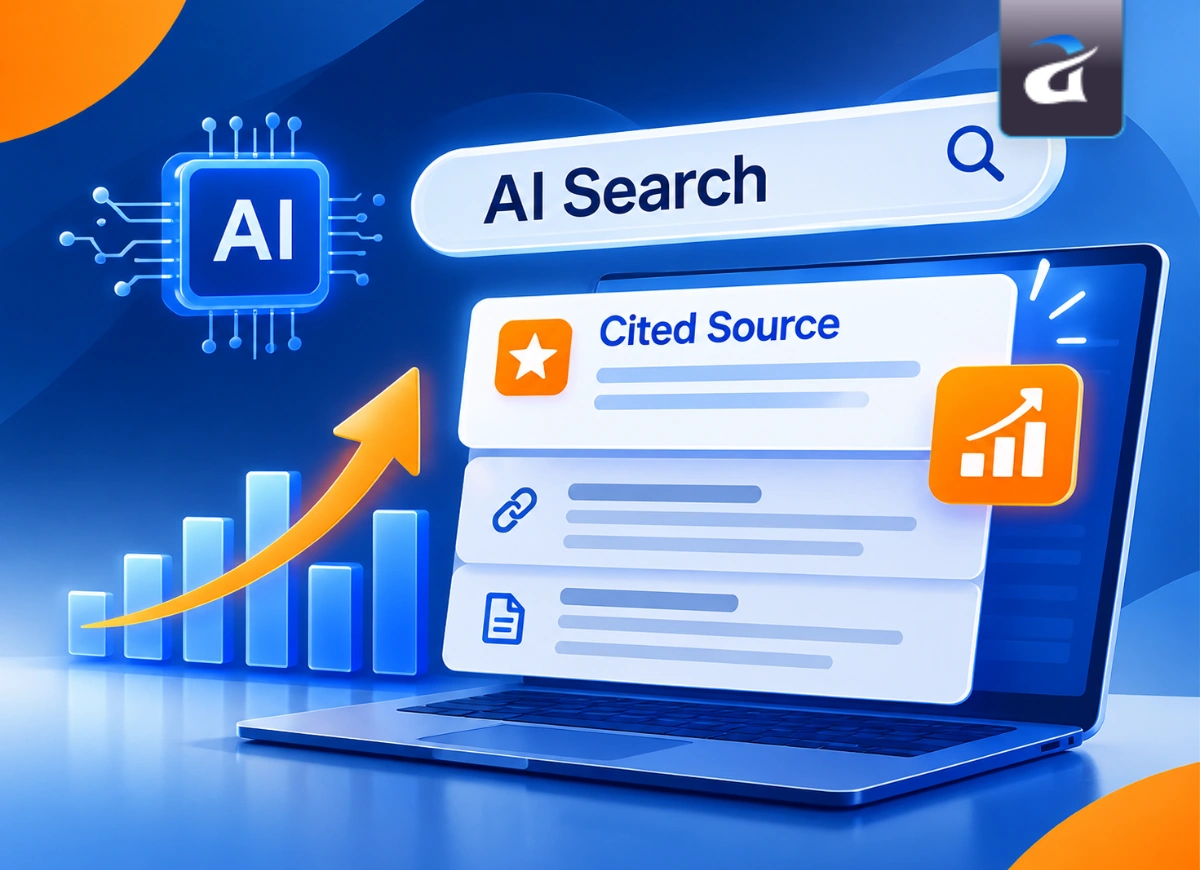
Search does not always start with a couple of keywords anymore. Someone looking for an SEO agency, a software solution, or advice about a business problem might type a full question instead. They may also ask the same question inside an AI-powered search tool and get a response that pulls together information from several sources. 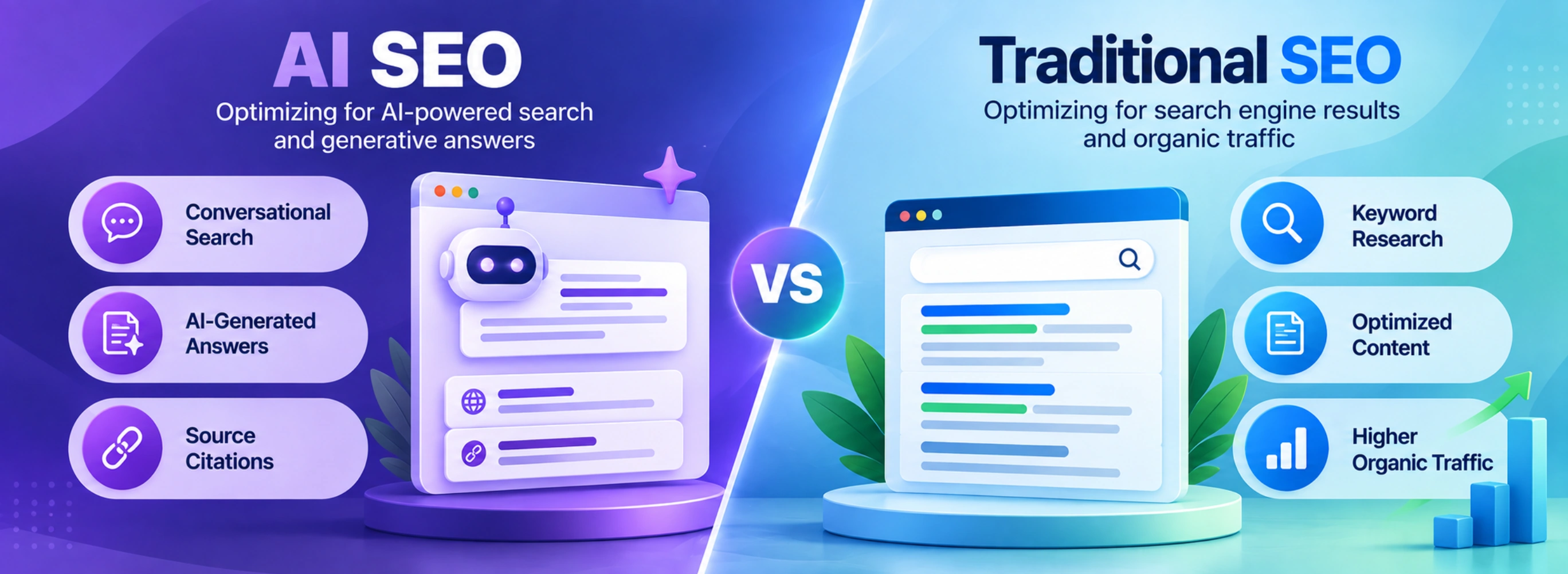
That has changed the conversation around SEO. Terms such as AI SEO, Generative Engine Optimization (GEO), and Answer Engine Optimization are becoming more common as marketers look at what happens beyond the traditional search results page.
Still, this is not a case of old SEO suddenly becoming irrelevant. A website needs good content, clear information, sound technical foundations, and credibility regardless of where the visitor finds it. What is changing is the way people discover that information and the different places where a business can become visible.
So when people ask about AI SEO vs traditional SEO, the useful question is not really which one wins. It is how the two approaches overlap, where they differ, and what businesses should be doing as search becomes more conversational.
Key Takeaways
AI-powered search is giving people another way to research companies, products, services, and questions.
Good SEO still depends on useful information, technical accessibility, relevance, and credibility.
AI SEO and Answer Engine Optimization add new considerations to established search practices.
GEO usually refers to visibility within generative search experiences, while SEO covers a much broader area.
Businesses can prepare for AI-driven search without throwing away the SEO work they have already built.
How AI Search Is Changing the Way People Find Information
From Search Results to AI-Generated Answers
Think about how someone might research a business problem. Instead of searching for three separate phrases such as "B2B lead generation strategies," "best lead generation channels," and "how to qualify B2B leads," they might ask one longer question: "What is a practical lead generation strategy for a small B2B software company?"
That kind of conversational query gives the search system more context.
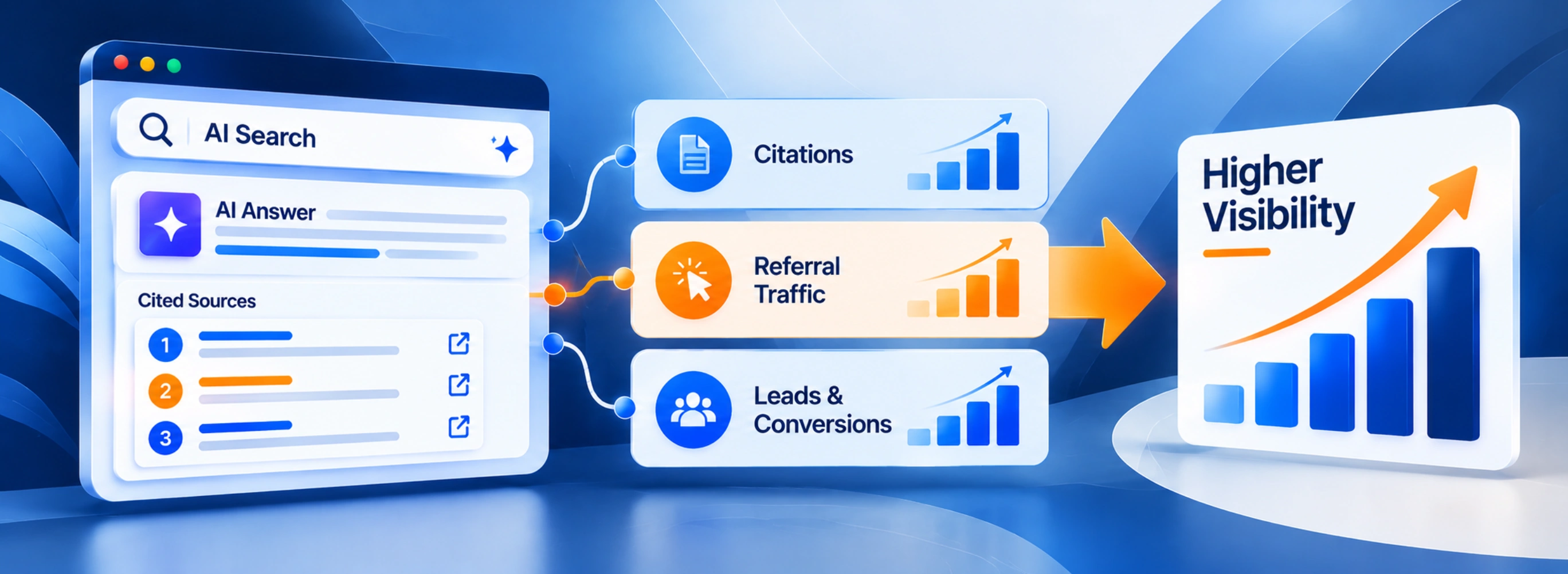
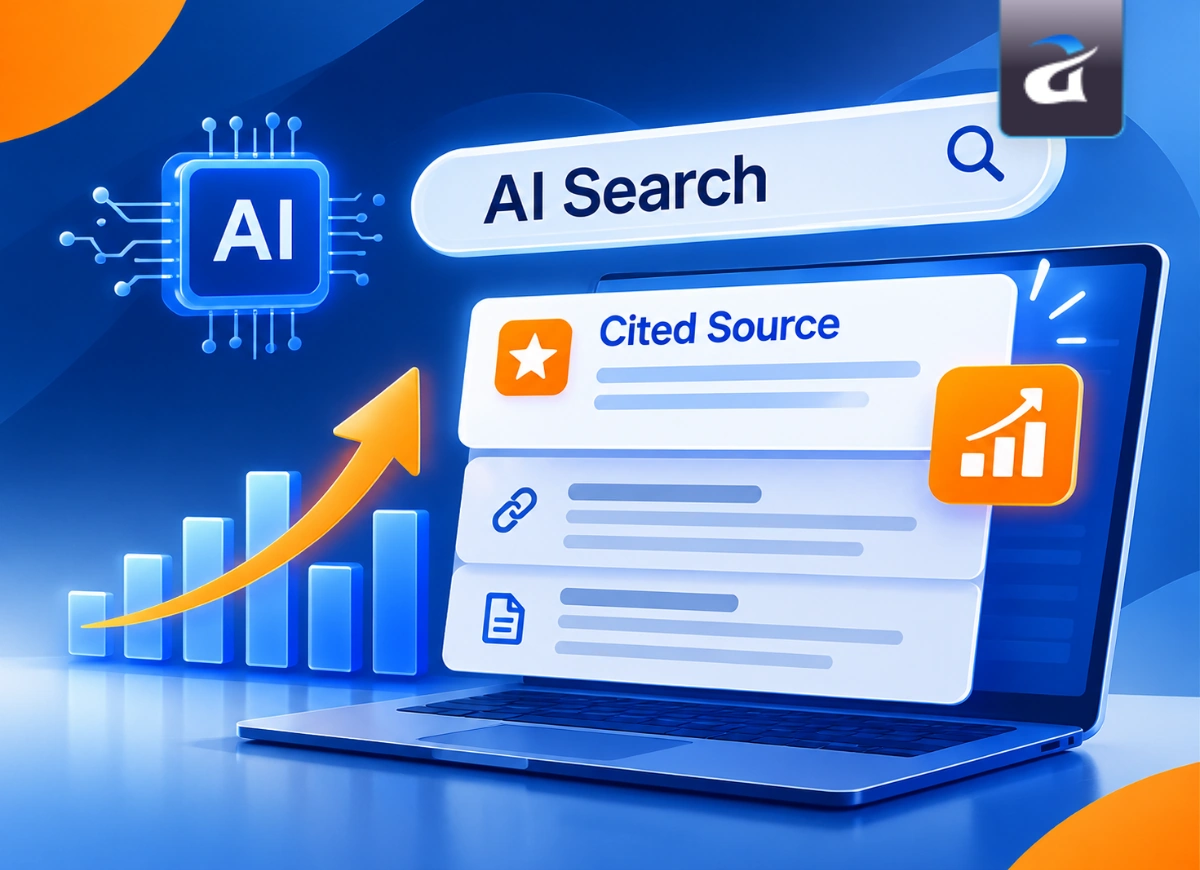
AI search can use that context to produce an answer rather than simply presenting a list of pages. Depending on the search experience, the response may bring together information from multiple sources, summarize key points, and sometimes provide links for further reading.
For users, this can be convenient. They may get an overview before deciding which sources deserve their attention. For publishers and businesses, however, it creates another consideration: being visible may involve more than appearing as a blue link on a results page.
Some informational searches may now be answered without the user needing to visit another website. This is often referred to as a zero-click or reduced-click experience. It does not mean websites have lost their purpose. Detailed product information, service pages, original research, pricing information, company details, and in-depth resources still give users reasons to visit a site.
The bigger change is the path people take to get there.
Businesses should pay attention to questions such as:
- Are the answers customers need actually available on the website?
- Can someone understand the subject without having to decode jargon?
- Does the content provide enough context around the main topic?
- Are important services, products, and areas of expertise explained clearly?
AI search is still developing, so there is no single formula that guarantees visibility. A better approach is to make the underlying information genuinely useful and easy to understand.
What Is Traditional SEO and Why Does It Still Matter?
The Core Principles Behind Traditional SEO
Traditional SEO has never been only about putting keywords into a webpage. At its core, it is about helping search engines understand a website and helping users find information that matches what they are looking for.
That involves several moving parts. A business may begin with keyword research, but the work does not end there. The page also needs to match search intent, load properly, be accessible to crawlers, and give visitors a useful experience.
For example, someone searching "website development company" is likely looking for something different from someone searching "what is responsive web design?" Treating both searches in exactly the same way would produce poor content.
Traditional SEO can involve:
- Researching the terms and questions people use
- Matching pages to the right search intent
- Improving titles, headings, descriptions, and page content
- Making websites easier to crawl and index
- Creating useful internal links between related pages
- Earning credibility through relevant references and links
- Addressing technical issues that affect accessibility and performance
- Making pages easy to use on different devices
Content quality matters just as much. A page written entirely to satisfy a keyword target may technically mention the right phrase but still fail to answer the reader's question.
This is one reason the fundamentals of SEO continue to matter in an AI-influenced search environment. AI systems still need information to work with. If a company's website is difficult to crawl, poorly organized, vague about its services, or filled with shallow content, adding AI-focused terminology will not solve the underlying problem.
The technology around search may change, but a useful page still needs to be useful.
AI SEO vs Traditional SEO: What Is Actually Different?
How Search Visibility Is Changing
The distinction becomes easier to understand when we look at where a business can be discovered.
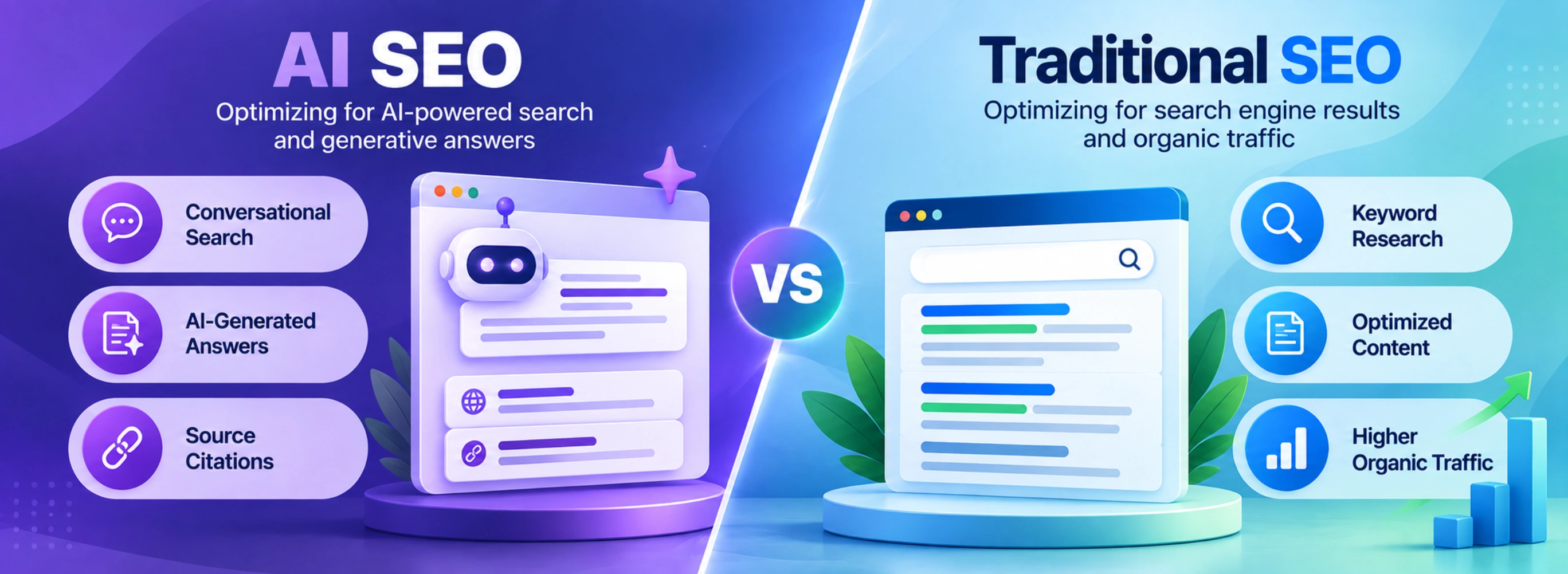
Traditional SEO has largely focused on organic search results: improving a page's relevance and technical quality so it can compete for searches that matter to the business.
AI-oriented SEO adds another layer. A business may also want its information to be understandable and useful when search experiences generate a response, summarize a topic, or connect several pieces of information.
| Traditional SEO | AI-Oriented SEO |
| Ranking in search results | Being useful to AI-generated answers |
| Keyword and query targeting | Understanding broader topics and entities |
| SERP visibility | Visibility within AI-generated responses |
| Website clicks | Brand mentions, citations, and referral opportunities |
| Search engine optimization | Optimization for evolving answer and search experiences |
The two approaches overlap more than the labels suggest.
Take a detailed service page as an example. If it clearly explains what a company does, who it serves, what problems it solves, and how its service works, that page can be useful in a conventional search journey. The same clarity can also make the information easier to interpret in an AI-driven search environment.
This is also where the phrase GEO vs SEO comes up.
GEO, generally short for Generative Engine Optimization, is used to describe efforts aimed at improving the way content may be surfaced or represented in generative search experiences. SEO is broader. It covers the established practices involved in organic search visibility, from technical accessibility and content to authority and relevance.
The terminology around GEO is still developing, and different practitioners use it in slightly different ways. It should not be treated as a formal replacement for SEO.
For a business, the distinction is more useful as a way of thinking about visibility than as a reason to maintain two completely separate strategies.
What Is Answer Engine Optimization and How Does It Work?
Optimizing Content for Direct and Contextual Answers
Answer engine optimization is a way of thinking about content that puts direct, useful answers at the centre of the page.
Suppose a visitor wants to know how much a website project might cost. A weak page might repeat "website development cost" several times without actually explaining anything. A useful page would discuss the factors that influence pricing, such as functionality, design requirements, integrations, maintenance, content, and the size of the project.
That difference matters.
Answer-focused content should make it easy for a reader to find the main point while giving them enough supporting information to understand the subject properly.
Some practical considerations include:
- Put the answer to an important question where the reader can find it easily.
- Use headings that describe what the section actually covers.
- Explain specialist terms instead of assuming every reader knows them.
- Support factual claims with reliable information where appropriate.
- Cover related aspects of a topic when they help answer the main question.
- Use FAQs or question-based sections when they reflect genuine customer concerns.
- Keep individual explanations focused rather than stretching a simple point across several paragraphs.
This approach has considerable overlap with good SEO. Search intent still matters. So do useful content, logical headings, internal links, technical accessibility, and credibility.
The difference is the emphasis placed on how information is presented. An answer-driven experience may need to identify the relevant point quickly, while a conventional article may be designed around a broader browsing journey.
Businesses should also keep expectations realistic. No content structure or optimization method guarantees that an AI system will select, quote, cite, or recommend a particular webpage. These systems decide what information to use through processes that are outside a business's direct control.
Are AI SEO Services Becoming More Important for Businesses?
What Businesses Should Look for in an AI SEO Strategy
The growing interest in AI search is one reason businesses are beginning to explore AI SEO services. But the useful question is not simply, "Do we need AI SEO?"
A better starting point is to ask what customers are searching for, how they are asking those questions, and whether the company's website gives them strong answers.
For some businesses, that may reveal gaps in existing content. A company could have excellent service pages but very little educational content. Another might have hundreds of blog posts but no clear connection between those articles and its main services.
An AI-focused SEO review can consider areas such as:
- Technical SEO and website accessibility
- Search intent and changing query patterns
- Content quality and topical coverage
- Connections between related subjects, services, and entities
- Clear website and content structures
- Questions customers commonly ask before making a purchase
- Visibility across newer search experiences
- Changes in traffic, referrals, branded searches, and content performance
It is also worth looking beyond the blog section.
A software company, for example, should not rely on blog posts alone to explain what it does. Its main website pages should give visitors a clear picture of its services, the technologies it works with, the industries it understands, and the problems it can help solve. Someone landing on the website should not have to jump between several unrelated articles just to figure that out.
This is also where SEO starts to overlap with other parts of digital marketing. A website’s content, structure, user experience, and overall digital strategy all affect how easily people can find information and understand a business.
For Aciano Technologies, this means SEO can sit alongside its wider technology and digital growth services. Depending on the topic, content can naturally point readers toward relevant areas such as SEO & Digital Growth, AI Development & Consulting, Web Development, or Custom Software Development.
The key is to keep those links useful. An internal link should take the reader somewhere that adds context or helps them explore a related service, rather than being added simply to include another keyword.
Should Businesses Choose AI SEO or Traditional SEO?
Building a Search Strategy That Adapts to Both
There is no practical reason for most businesses to treat AI SEO and Traditional SEO as two competing departments.
Consider a company selling a complex B2B software solution. Its potential customer might find the company through an ordinary Google search, read a detailed article, encounter the brand in an AI-generated answer, return to the website later, and eventually contact the sales team.
The journey can involve several discovery points.
That makes the quality of the underlying website more important, not less. Businesses need information that is accurate, easy to navigate, and useful regardless of where the first interaction happens.
| Business Need | Traditional SEO Focus | AI/Search-Era Focus |
| Website visibility | Search rankings | Search and AI visibility |
| Content | Keywords + intent | Context + topical depth |
| User questions | Search queries | Conversational questions |
| Authority | Links and credibility | Trust, expertise, and reliable information |
| Measurement | Rankings and organic traffic | Broader visibility and referral signals |
The measurement side may need some adjustment too.
Rankings and organic traffic remain useful indicators, particularly for pages that target established search queries. At the same time, businesses can watch branded searches, referral traffic, engagement, leads from informational content, and the questions customers bring to sales teams.
This does not mean every business needs a completely new reporting system. It means marketers should avoid judging the entire search strategy through a single number.
The more useful goal is to build a website that can handle different ways of discovering information.
What Should Businesses Do Next?
Preparing for the Next Stage of Search
Businesses do not need to turn their SEO strategy upside down because AI search is growing.
A sensible first step is to look at what is already working and identify the gaps.
Ask whether the website makes it easy to answer basic questions such as:
- What does the company actually offer?
- Who are its services designed for?
- What problems does it solve?
- What questions do potential customers ask before contacting the business?
- Are the important pages connected logically?
- Can search engines access and understand the site's content?
- Does the website provide enough useful detail to establish credibility?
The answers can reveal where the real work is.
One company may need better technical SEO. Another may need to rewrite thin service pages. A third may have strong content but poor internal linking. Some businesses may benefit from expanding their coverage of customer questions rather than publishing more articles simply to increase the number of pages on the site.
From there, teams can test improvements, monitor search behaviour, and adjust their content as the search environment develops.
The discussion around AI SEO vs traditional SEO can sometimes make the two sound like opposing approaches. In practice, there is considerable overlap. Traditional SEO provides many of the building blocks: relevant content, sound technical foundations, useful internal linking, search intent, and credibility. AI-oriented strategies add another consideration — how that information works when people search through conversational and generative interfaces.
That makes adaptation more useful than replacement.
Businesses that continue to invest in clear, reliable, well-organized information will be better prepared to respond as search experiences change. The specific technology may continue to evolve, but giving people a useful answer remains a solid place to start.
Frequently Asked Questions
What is AI SEO?
AI SEO refers to SEO practices that consider how AI-driven search experiences understand, organize, and present information. It focuses on clear content, topical relevance, user intent, structured information, and visibility across emerging AI-powered search experiences while still relying on many established SEO principles.
How is AI SEO different from Traditional SEO?
AI SEO considers visibility within AI-generated and conversational search experiences, while Traditional SEO primarily focuses on improving rankings in conventional search results. However, the two approaches overlap significantly because technical accessibility, relevant content, search intent, authority, and website quality remain important for both.
What is Answer Engine Optimization?
Answer engine optimization is the practice of structuring and improving content so it can provide clear, relevant information for answer-driven search experiences. It can involve direct answers, descriptive headings, accurate information, strong topical coverage, and content that addresses specific user questions in context.
What is the difference between GEO vs SEO?
GEO, or Generative Engine Optimization, generally refers to efforts aimed at improving visibility within generative or AI-powered search experiences. SEO is the broader and more established practice of improving organic search visibility. GEO and SEO can overlap, and GEO should not be viewed as a complete replacement for traditional SEO.
Do businesses still need Traditional SEO with AI search?
Yes. Traditional SEO fundamentals remain relevant as businesses adapt to AI search. Technical accessibility, useful content, search intent, internal linking, authority, and website quality can provide a strong foundation for visibility across both conventional search results and emerging AI-driven search experiences.