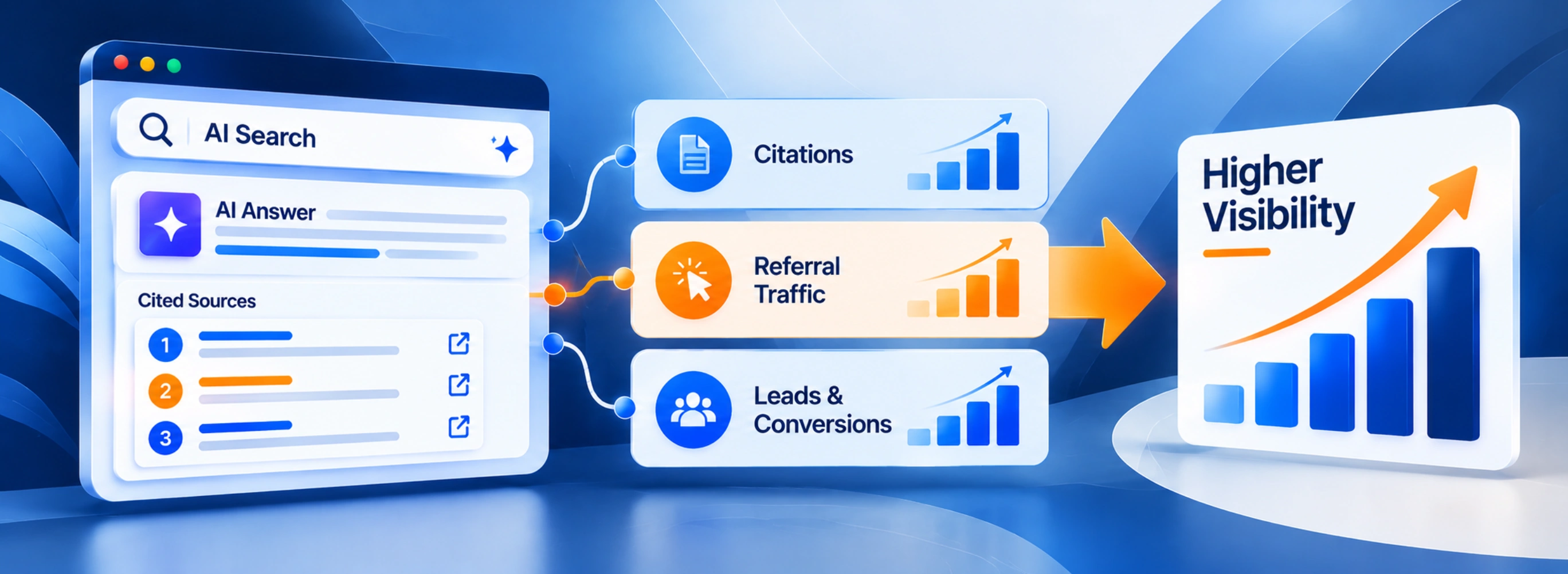



















AI-powered search is changing how people discover information, compare options, and decide which businesses to trust. Alongside traditional search results, users may now see AI-generated answers that summarize information and cite selected sources. For businesses, this means search visibility is not only about rankings; it is also worth understanding where and how your content is referenced in AI experiences.
The practical response is not to abandon SEO or chase a guaranteed AI shortcut. It is to strengthen the basics, publish useful and specific content, make your site accessible to crawlers, and measure available visibility signals. This guide covers the AI search trends that matter, how AI search optimization works, and how to track AI search visibility.
Key Takeaways
- AI search is creating new opportunities and challenges for business visibility.
- Traditional SEO remains the foundation for AI search visibility.
- Helpful, original, well-structured content matters more than chasing AI-specific tricks.
- AI citations and mentions are becoming useful visibility signals alongside rankings.
- Businesses should track AI visibility, organic traffic, and conversions together.
- Regular content audits and AI visibility checks can help identify missed opportunities.
What Is AI Search?
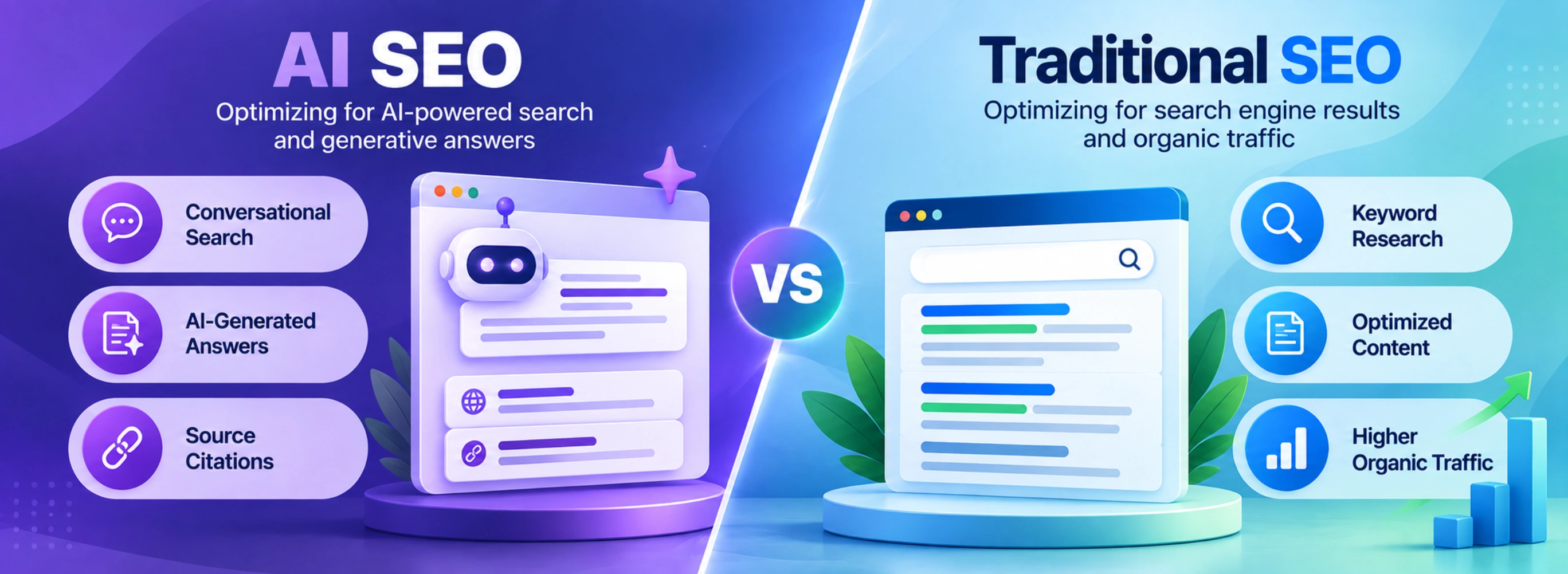
AI search describes search experiences that use artificial intelligence to interpret a query, synthesize information, or provide a conversational response. Examples include AI-generated summaries and answers in Microsoft Copilot and Bing. These experiences may cite webpages as sources, giving users a way to explore the underlying information.AI Search vs Traditional Search
| Factor | Traditional search | AI search |
| What the user sees | A ranked list of links | A generated answer that may include cited sources |
| Typical query | Keywords or a direct question | Questions, detailed prompts, and follow-ups |
| Visibility opportunity | Appear prominently in search results | Be discoverable and potentially cited in an AI-generated answer |
| Click behavior | Users choose a result to visit | Users may read the answer first, then click a cited source—or not click |
Microsoft describes AI Performance in Bing Webmaster Tools as a way for site owners to see when their content is cited in AI-generated answers across supported Microsoft AI experiences. This makes citations a useful additional visibility signal, but it does not replace traditional search performance metrics.
Microsoft: Introducing AI Performance in Bing Webmaster Tools
How Big Is AI Search Right Now?
AI search usage and product capabilities continue to evolve, so broad user-count estimates can quickly become outdated and may not be directly comparable across platforms. For an individual business, the most useful question is not simply how many people use an AI tool; it is whether the business’s target customers use these experiences and whether its content is being surfaced.Start with the markets, services, and questions that matter to your business. Then track traditional organic performance alongside any available AI citation data. This gives you a more actionable picture than relying on a single industry-wide usage statistic.
Search Trends in 2026: Six Trends to Watch
The most useful search trends to monitor are changes in how people ask questions, how AI experiences present sources, and how website owners measure visibility. Their impact can vary by industry, query type, geography, and platform, so validate each trend against your own data.| # | AI search trend | What it means for businesses |
| 1 | AI-generated answers are part of discovery | Your content may be summarized or cited before a user visits your site. |
| 2 | Citations are becoming measurable | Microsoft’s AI Performance reporting shows citation activity and cited URLs across supported AI experiences. |
| 3 | Users can explore topics conversationally | Create content that answers specific questions and supports useful follow-up questions. |
| 4 | Brand and product information must stay consistent | Keep key business, product, and service details accurate across the web. |
| 5 | Visibility measurement is expanding | Use available AI reporting alongside traditional search and analytics data. |
| 6 | SEO fundamentals still matter | Crawlability, clear content, relevant links, and useful pages remain sensible foundations. |
Avoid treating one study or one AI-generated answer as proof of a universal trend. AI answers can change between prompts and over time, and third-party studies may use different samples or methods.
What These AI Search Trends Mean for Your Business
- Informational content may be summarized before a user visits a website, so make sure key pages answer customer questions clearly and accurately.
- Your brand information should be consistent. Keep service descriptions, product details, contact information, and other important facts current.
- Rankings are only one part of the picture. Continue tracking organic performance and add citation data where a platform makes it available.
- Plan for the search experiences your customers use. Prioritize relevant platforms and topics rather than attempting to monitor every AI tool.
How AI Search Changes Clicks and Organic Traffic
AI-generated answers can change how users interact with search results. Some people may find enough information in an answer, while others may click a cited source to verify details or explore a solution. The size of the effect depends on the query, platform, and audience, so avoid assuming every business will experience the same traffic change.| Area | What to monitor | How to use the insight |
| Organic clicks and impressions | Search Console and Bing Webmaster Tools performance data | Look for changes by page, query, and period. |
| AI citations | Available AI performance reports | Identify pages that are referenced and topics connected with citations. |
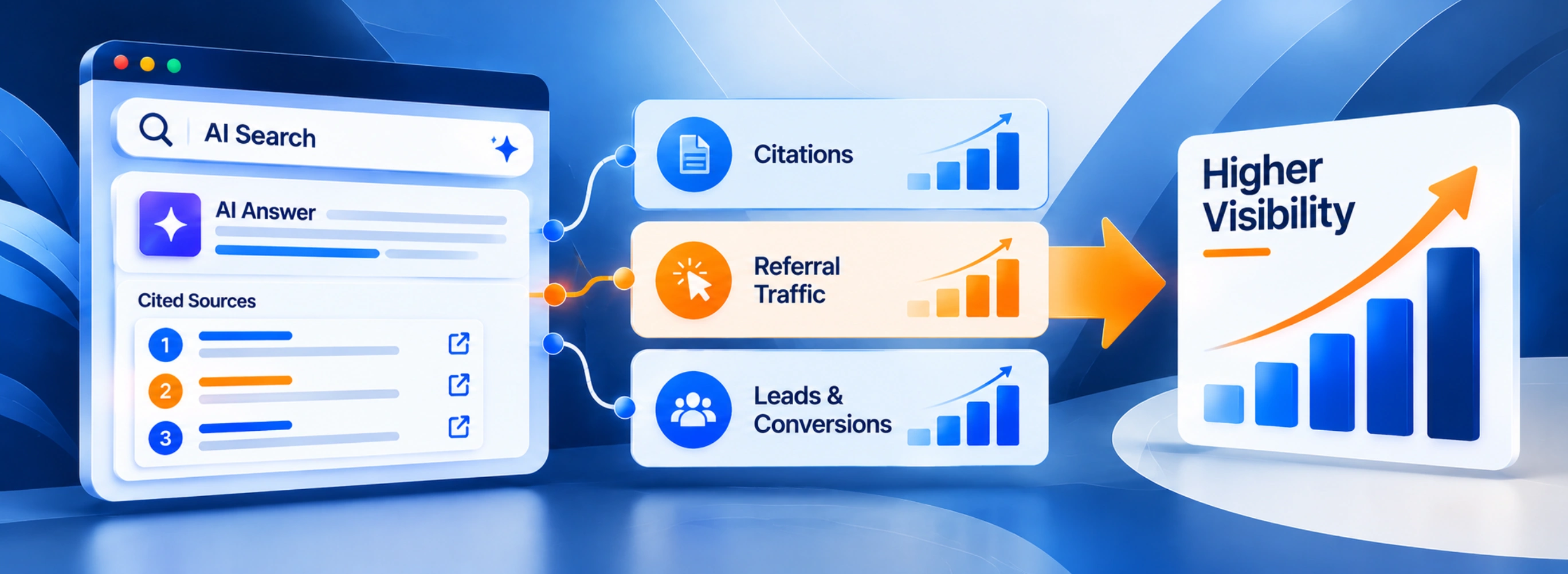
| Referral visits | Analytics reports for AI-tool referral sources | Check whether AI-referred visitors engage or convert. |
| Conversions and leads | Form submissions, purchases, calls, and qualified enquiries | Assess business outcomes rather than relying only on visibility metrics. |
Why Being Cited in AI Search Still Pays Off
A citation can give a user a direct path to your website and show that your content was used as a source in an AI-generated answer. However, a citation does not guarantee a click, a lead, or a sale. Treat it as a visibility signal and evaluate its value alongside referral sessions, engagement, and conversions.Microsoft’s guidance on measuring conversions in AI search recommends considering signals beyond clicks alone, including visibility and citations, while connecting measurement to the outcomes that matter for each business.
Microsoft: How AI Search Is Changing the Way Conversions Are Measured
AI Search Optimization: What Actually Works
AI search optimization is best approached as an extension of sound SEO: make important pages accessible, explain topics clearly, provide useful information, and support claims with evidence. No tactic can guarantee that a page will be cited by an AI system. Focus on improvements that help both users and search systems understand the page.What Google's Official AI Search Guidance Says
Google’s guidance for its own AI search features is separate from Microsoft’s reporting tools. For this version of the article, the fact links are intentionally limited to Microsoft sources. Microsoft’s published materials emphasize making content discoverable, clear, accurate, and useful, and provide reporting to help publishers understand how their pages appear in supported AI experiences.Do not treat a special schema type, a fixed word count, or an FAQ section as a guaranteed route to AI citations. Use structured data when it accurately describes the visible page and supports an appropriate search feature.
AI Search Optimization Tactics You Can Start This Month
| Tactic | How to do it | Why it helps |
| Lead with the answer | Give a concise, direct answer near the beginning of each section, then add detail. | Readers can quickly understand the point, and the page is easier to scan. |
| Add original proof | Include real examples, first-hand experience, data, and clearly attributed expert commentary. | Specific evidence makes content more useful and verifiable. |
| Keep pages discoverable | Review indexing, internal links, blocked resources, and sitemap health in webmaster tools. | Important content needs to be accessible to search crawlers. |
| Use tables and FAQs where useful | Use tables for comparisons and FAQs for genuine customer questions. | Structured presentation helps readers locate key information. |
| Use schema accurately | Implement only relevant structured data that matches visible content. | It can support eligible search features, but it is not a guaranteed AI visibility switch. |
| Keep brand details consistent | Review business, product, and service information across your website and relevant profiles. | Consistent information reduces ambiguity for customers. |
| Add relevant multimedia | Use descriptive images and video where they help explain the topic. | Useful media can improve the overall experience and support visual discovery. |
| Review preview controls carefully | Understand the impact of snippet and indexing controls before changing them. | Controls can affect how content is made available in search experiences. |
Use these tactics as a practical checklist, not a guaranteed formula. Test changes on relevant pages and monitor outcomes before applying them sitewide.
AI Search Visibility: How to Measure It
AI search visibility describes how often your brand or website appears as a citation, mention, or linked source in AI-generated answers. The exact signals available depend on the platform, and AI answers can vary by query and time.Where AI Search Visibility Data Lives
Microsoft’s AI Performance report in Bing Webmaster Tools provides information about citations across supported AI experiences, including total citations, cited pages, and grounding queries. Microsoft has also announced additional preview capabilities such as topics, intents, citation share, and comparison features. These are observational visibility signals, not a universal ranking score.Microsoft: New AI Visibility Insights in Bing Webmaster Tools
| Metric | What it tells you | How to track it |
| AI citations | How often your content is cited in supported AI answers | Review AI Performance reporting where available. |
| Cited pages | Which URLs are referenced | Compare cited pages with your priority content. |
| Grounding queries | Phrases associated with content retrieval for AI answers | Use the available query data to identify topic opportunities. |
| Branded search demand | Whether interest in your brand changes over time | Review branded search queries and analytics trends. |
| AI referral sessions | Visits arriving from identifiable AI-tool referrals | Review referral sources in your analytics platform. |
| Conversions from AI referrals | Whether referred visitors complete meaningful actions | Track leads, purchases, calls, or other relevant goals. |
Expect platform coverage and reporting details to differ. Citation activity does not directly establish ranking, authority, or business impact; use it with your other performance data.
A Simple Monthly AI Search Visibility Check
- Write 20 customer questions that your products or services can answer.
- Test the questions in the AI search experiences that are relevant to your audience.
- Record whether your brand is cited, mentioned without a link, or absent.
- Note which competitors and source pages appear instead.
- Improve the most relevant page and repeat the check next month.
Your 90-Day AI Search Action Plan
Start with pages that already matter to your business, then expand based on evidence. Keep the work connected to normal SEO, content, and analytics processes.| Phase | Days | Actions | Success measure |
| Audit | 1–30 | Review crawling and indexing; identify priority pages and customer questions; record a baseline of available AI citations. | Technical issues prioritized and baseline recorded. |
| Improve | 31–60 | Clarify key page answers; improve structure and internal links; add useful examples and accurate business details. | Priority pages reviewed and meaningful improvements published. |
| Measure and expand | 61–90 | Repeat the prompt checks; review available citation reporting and referral conversions; prioritize the changes that show useful results. | Performance compared with baseline and next actions documented. |
Sources
The following Microsoft sources support the AI visibility, measurement, and optimization guidance in this article. Platform features and preview reporting can change, so verify current availability before publishing detailed feature claims.- Introducing AI Performance in Bing Webmaster Tools Public Preview
- New AI Visibility Insights in Bing Webmaster Tools: Intents, Topics, Citation Share, Compare
- How AI Search Is Changing the Way Conversions Are Measured
- Start Using Bing Webmaster Tools to Improve Your Site Visibility
Frequently Asked Questions
What is AI search?
AI search uses artificial intelligence to interpret queries and generate or summarize responses. Some experiences include citations or links to sources users can visit for more information.
What are the biggest AI search trends in 2026?
Key areas to monitor include AI-generated answers, source citations, conversational queries, consistent brand information, and new ways to measure visibility. The impact varies by audience and platform.
What is AI search optimization?
AI search optimization means improving content clarity, technical accessibility, usefulness, and supporting evidence to help content be discovered and understood in AI-powered search experiences.
Is AI search optimization different from SEO?
It builds on SEO rather than replacing it. Technical accessibility, relevant content, clear page structure, and useful internal links remain practical foundations.
Do I need special schema for AI search?
Do not add schema on the assumption that it guarantees AI citations. Use structured data when it accurately describes visible content and supports a relevant feature.