


















A strong Lead Acquisition Strategy connects the entire journey from audience research to acquisition, conversion, qualification, nurturing, and sales follow-up. Instead of treating SEO, advertising, content, social media, and outreach as separate activities, businesses can build a process where each channel has a clear role.
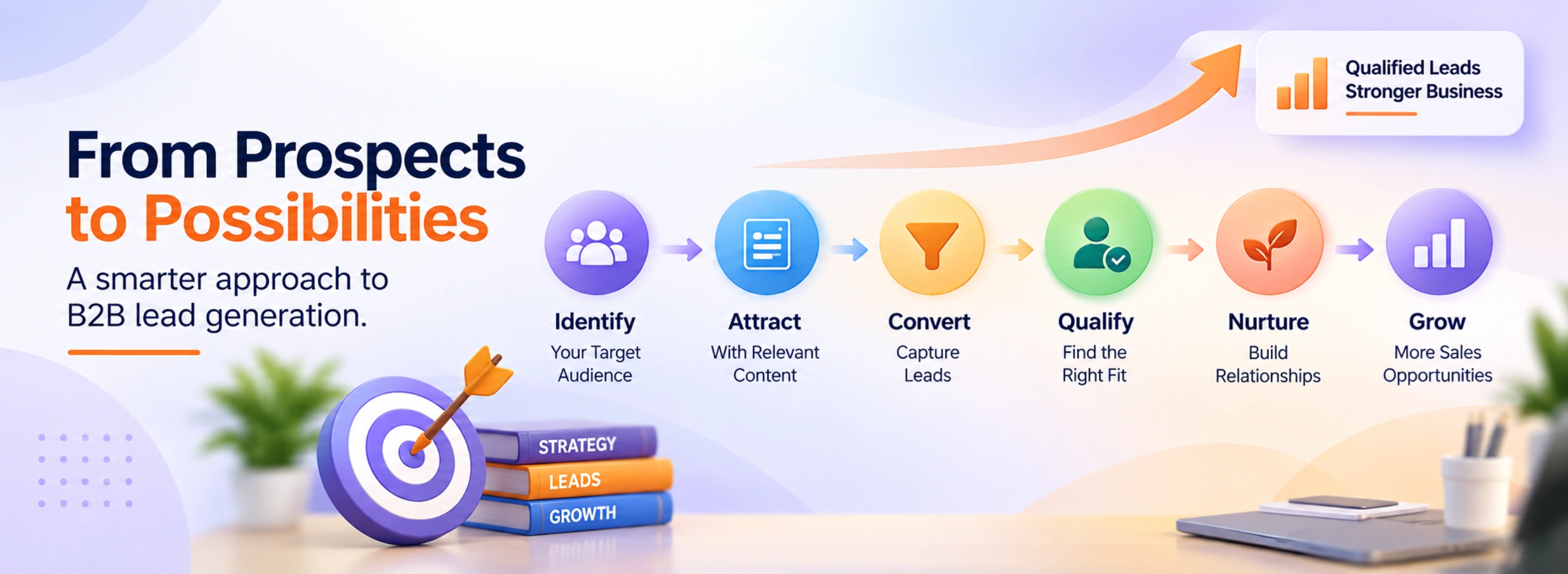
For B2B companies, this matters because buying decisions are often longer and involve multiple people. Organic channels, paid campaigns, content, and Outsourced B2B Lead Generation can all contribute, depending on the company's audience, market, resources, and goals.
Key Takeaways
- A strong lead acquisition strategy connects audience targeting, content, conversion, qualification, and sales follow-up.
- Digital marketing and lead generation work together to attract relevant prospects and turn interest into opportunities.
- Organic lead generation through SEO and valuable content can support sustainable B2B growth over time.
- Outsourced B2B lead generation can provide additional expertise and prospecting capacity when internal resources are limited.
- Businesses should measure qualified opportunities and lead quality, not just the total number of leads generated.
- Continuous testing, qualification, nurturing, and optimization help improve the overall acquisition process.
What Is a Lead Acquisition Strategy?
How businesses turn prospects into qualified leads
Lead acquisition is the process of attracting potential customers, capturing their interest, determining whether they are a relevant prospect, and moving suitable leads toward a sales conversation.It is different from simply generating traffic. A website might attract thousands of visitors through search, but if those visitors do not match the company's target market or have no reason to enquire, traffic alone has limited commercial value.
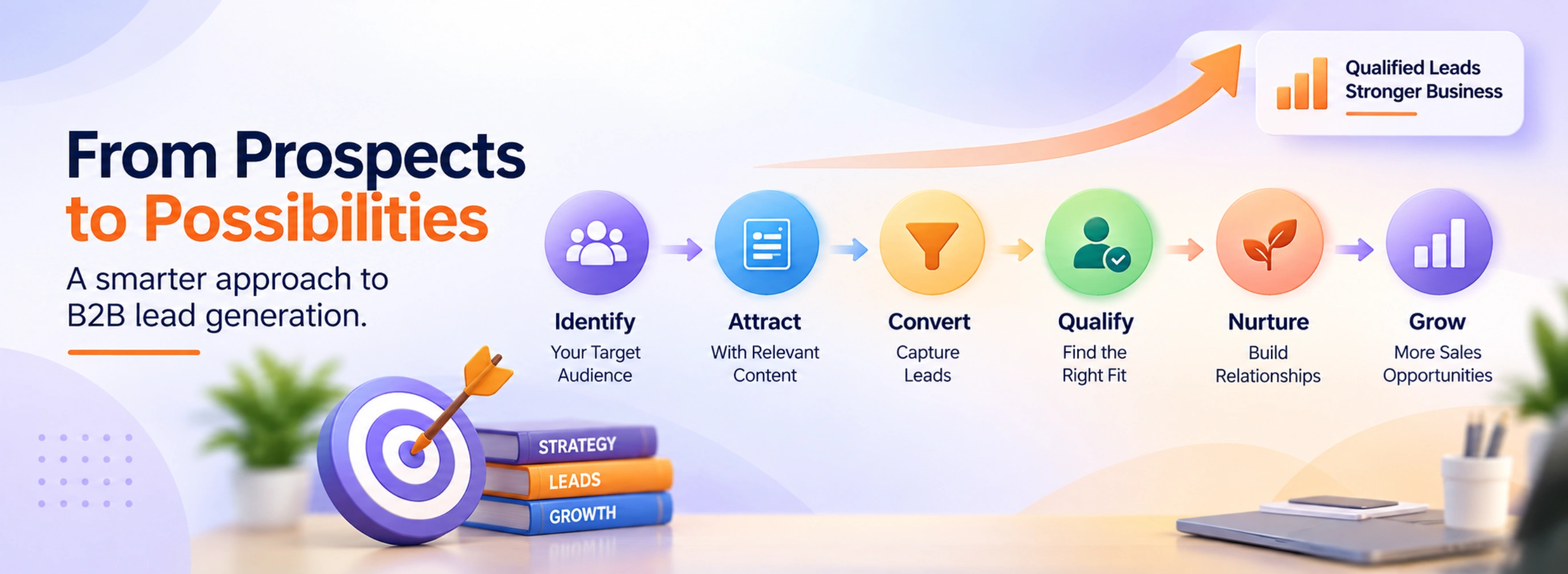
A useful Lead Acquisition Strategy connects several activities:
Audience → Acquisition Channel → Content/Offer → Conversion → Qualification → Nurturing → Sales
For example, a technology company targeting mid-sized businesses could publish an SEO article about improving business software. A reader who matches its target market may then visit a relevant service page, download a guide, or submit an enquiry. The business can then assess whether that enquiry represents a genuine sales opportunity.
It also helps to distinguish between different stages of the lead journey:
- Lead: A person or company that has shown some identifiable interest.
- Marketing-qualified lead (MQL): A lead that meets defined marketing criteria and appears sufficiently engaged for further evaluation.
- Sales-qualified lead (SQL): A prospect that has been assessed as having stronger potential for a sales conversation.
| Stage | Business Activity | Goal |
|---|---|---|
| Audience research | Identify target prospects | Define who to reach |
| Awareness | Content and campaigns | Attract relevant visitors |
| Conversion | Forms, calls, offers | Capture leads |
| Qualification | Assess prospects | Identify sales opportunities |
| Nurturing | Follow-up and content | Move prospects toward a decision |
The objective is therefore not simply to increase lead volume. A smaller number of relevant prospects can be more useful than a large database of contacts that have little connection to the company's offering.
The Role of Digital Marketing and Lead Generation
Using digital channels to attract and convert potential customers
Digital Marketing and Lead Generation are closely connected, but they are not identical.Digital marketing creates visibility and helps businesses reach potential customers through channels such as SEO, LinkedIn, social media, paid advertising, email, and content marketing. Lead-generation activities then provide ways for interested prospects to take the next step.
Depending on the business, this can include:
- SEO-driven landing pages
- Educational blog content
- LinkedIn campaigns and posts
- Paid search or social advertising
- Email campaigns
- Lead magnets such as guides or reports
- Contact forms and consultation requests
- Retargeting campaigns
- Conversion-focused website pages
The channels support different stages of the buying process rather than operating independently.
Channel selection should also reflect the business. A company selling a complex enterprise service may need educational content and account-based outreach, while another B2B company may generate more relevant enquiries through search or industry-specific campaigns.
Factors to consider include:
- Target audience
- Industry
- Buying cycle
- Geography
- Budget
- Product or service complexity
The goal is to create a path where the prospect can understand the problem, evaluate the solution, and take an appropriate next step.
Organic Lead Generation for Sustainable Growth
How SEO and valuable content can generate leads without relying entirely on paid campaigns
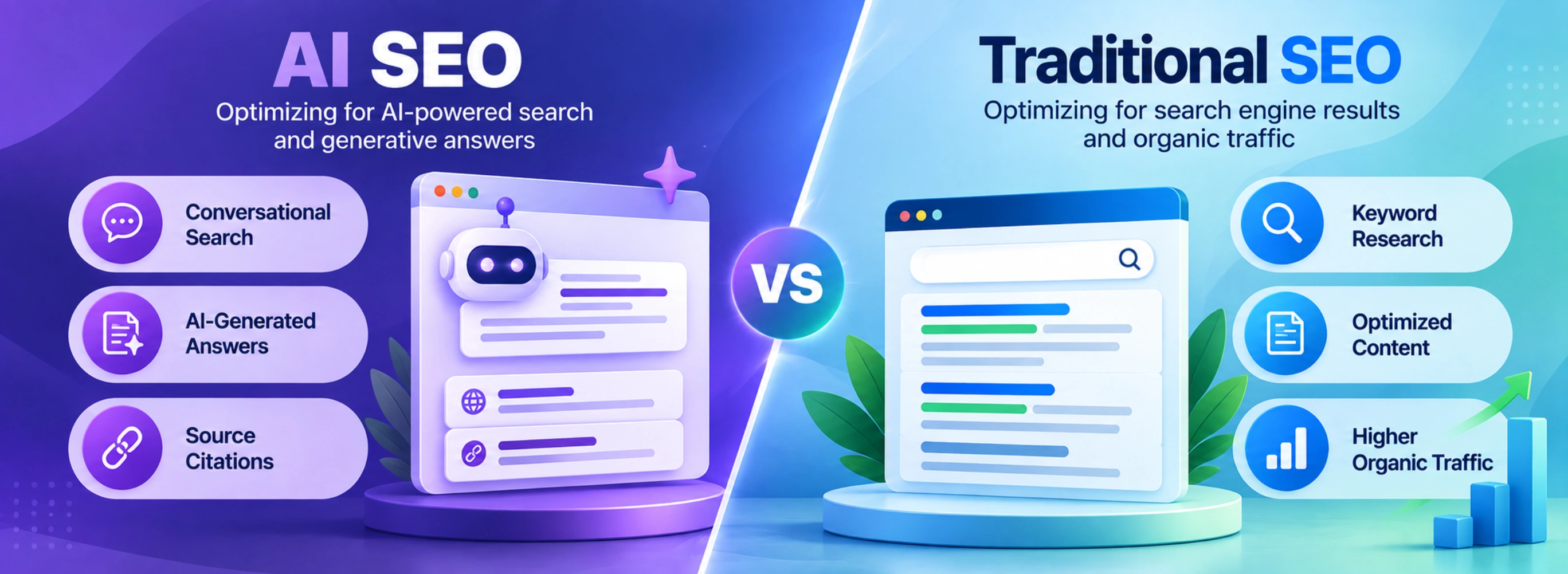
Organic Lead Generation uses unpaid search visibility and other non-paid channels to attract potential customers. It does not mean the activity costs nothing. Businesses still invest in research, content creation, SEO, website optimization, expertise, and ongoing maintenance.SEO is particularly useful when prospects actively search for information about a problem or solution. Instead of interrupting someone with an advertisement, a business can appear when that person is already looking for answers.
A B2B company can build organic acquisition around several types of content:
- Problem-focused blog posts
- Comparison content
- Service guides
- Industry reports
- FAQs
- Implementation guides
- Case studies
- Industry-specific landing pages
Internal linking plays an important role here. A blog about a business problem can link to a relevant service page, while the service page can direct visitors toward an enquiry form or consultation.
LinkedIn content can also support organic B2B acquisition by distributing expertise to a professional audience. Thought leadership, practical insights, industry commentary, and educational posts can help establish relevance before a prospect is ready to speak with sales.
Organic acquisition is particularly valuable when content continues attracting relevant visitors over time. However, results depend on factors such as search demand, competition, content quality, technical SEO, authority, and how effectively the website converts visitors.
The aim should be to build a connected content ecosystem rather than publishing articles simply to increase page count.
When Outsourced B2B Lead Generation Makes Sense
What businesses should evaluate before outsourcing lead generation
Outsourced B2B Lead Generation involves using an external provider to support some or all of the activities involved in identifying, reaching, and qualifying potential business customers.The scope can vary. Depending on the provider and agreement, outsourced support may include prospect research, database development, outreach, campaign execution, lead qualification, appointment setting, and reporting.
Outsourcing may be considered when an internal team has limited capacity or when the business wants additional expertise. It can also be relevant for companies entering a new market and needing support with prospect research or outreach.
Common situations include:
- A small marketing team with limited prospecting capacity
- Limited internal lead-generation expertise
- Expansion into a new geographic market
- A need for additional sales-development capacity
- Testing a new acquisition channel before building an internal function
Before selecting a provider, businesses should ask:
- Who is the target audience?
- How are prospects identified?
- How are leads qualified?
- What channels will be used?
- How will results be reported?
- How does the process connect with the sales team?
A useful outsourcing arrangement should therefore have clearly defined responsibilities, qualification standards, reporting requirements, and feedback between marketing, the external provider, and sales.
How to Build a Lead Acquisition Strategy That Converts
Connecting acquisition channels, qualification, and sales follow-up
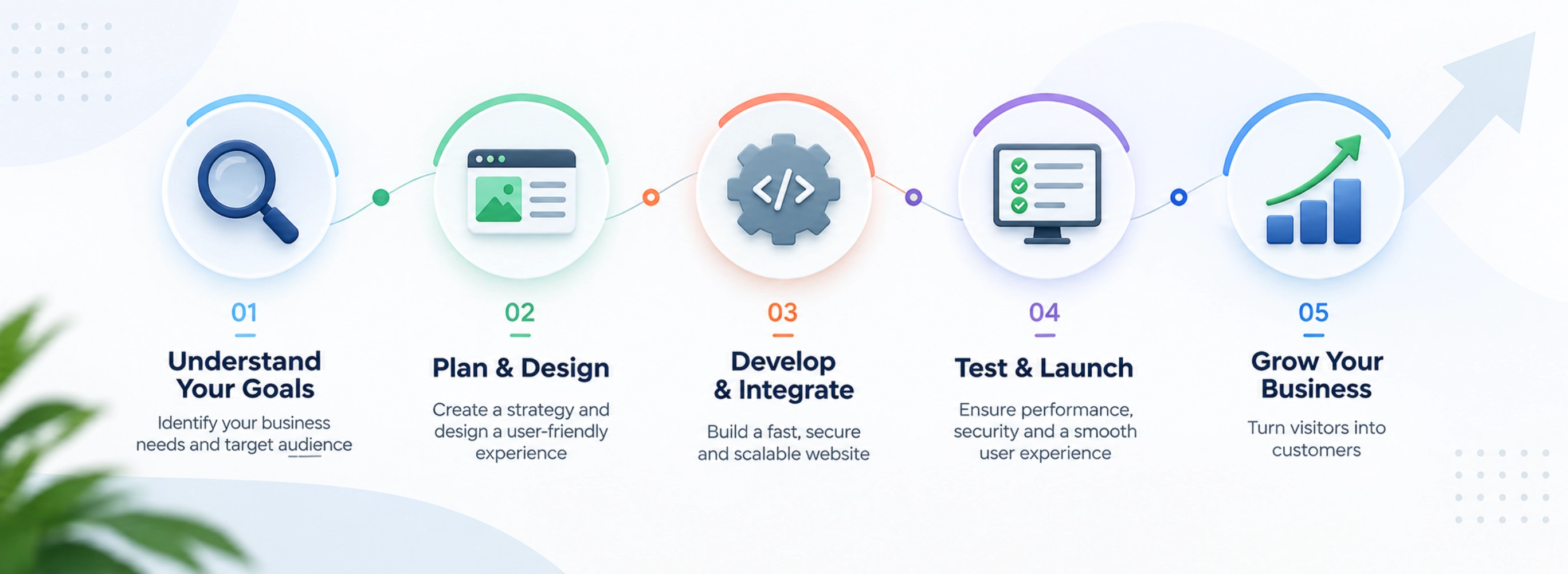
Building an effective Lead Acquisition Strategy starts with understanding that acquisition is a process rather than a single campaign.A practical framework can begin with these ten steps:
1. Define the ideal customer profile
Identify the companies most relevant to the business. Consider industry, company size, location, business model, technology environment, decision-makers, and common purchasing triggers.
2. Identify high-value problems and search intent
Understand what prospects are trying to solve. Search queries, sales conversations, customer questions, and competitor research can reveal useful topics and buying signals.
3. Select appropriate acquisition channels
Choose channels based on where the target audience actually researches and evaluates solutions. This could include SEO, LinkedIn, email, paid advertising, partnerships, or direct outreach.
4. Create relevant content and offers
Content should address genuine questions or problems. A technical audience may value implementation guides, while decision-makers may respond better to business-focused reports or solution comparisons.
5. Build conversion-focused landing pages
Each important campaign or acquisition route should lead to a page with clear messaging and a relevant next step.
6. Capture lead information
Forms, consultation requests, downloads, calls, and other conversion points can capture information that helps the business understand the prospect.
7. Establish lead qualification criteria
Define what makes a lead worth passing to sales. Criteria might include company fit, business need, authority, timing, project scope, or purchasing intent.
8. Connect marketing with sales
Marketing and sales should share an understanding of what constitutes a qualified opportunity. Feedback from sales can also reveal which acquisition sources are producing relevant prospects.
9. Nurture leads that are not ready to buy
Not every relevant prospect is ready for an immediate sales conversation. Email, educational content, remarketing, and useful follow-up can keep the business visible until the prospect's needs develop.
10. Measure performance and improve the process
Review acquisition sources, conversion rates, lead quality, qualified opportunities, and sales outcomes. The objective is to identify where prospects are being lost and improve those stages.
| Strategy Area | What to Measure | Why It Matters |
|---|---|---|
| SEO | Organic traffic and conversions | Measures search-driven acquisition |
| Content | Engagement and lead generation | Shows whether content attracts relevant prospects |
| Paid campaigns | Cost per lead and qualified leads | Measures campaign efficiency |
| Landing pages | Conversion rate | Shows whether traffic turns into leads |
| Sales follow-up | Qualified opportunities | Connects marketing activity to sales outcomes |
Businesses should also watch for signs that their current process needs improvement:
- Lead volume is high, but qualification is poor
- Website traffic does not produce enquiries
- Marketing and sales use different qualification criteria
- Leads are not followed up consistently
- Acquisition channels are not being measured properly
Practical takeaway
Effective B2B lead acquisition rarely comes from one campaign or one channel. A clear target audience provides the foundation, while Digital Marketing and Lead Generation bring visibility and conversion opportunities together.Organic Lead Generation can support long-term acquisition through search, content, and useful educational resources. Outsourced B2B Lead Generation may provide additional capacity when internal resources or expertise are limited. At the same time, lead qualification, nurturing, and sales follow-up remain essential parts of the process.
Aciano Technologies can support businesses looking to strengthen their digital presence, SEO, lead-generation activities, website performance, and broader digital growth through a connected technology and digital-marketing approach.
Frequently Asked Questions
How much does website development cost in Pakistan?
Website development costs vary depending on the number of pages, design requirements, functionality, integrations, e-commerce features, content, SEO, and ongoing support. Businesses should evaluate the scope and deliverables rather than relying on a single standard price.
How long does it take to develop a business website in Pakistan?
The timeline depends on the website's size, complexity, content requirements, custom design, functionality, and approval process. A simple business website generally requires less development time than an e-commerce platform or custom web application.
What should a high-converting business website include?
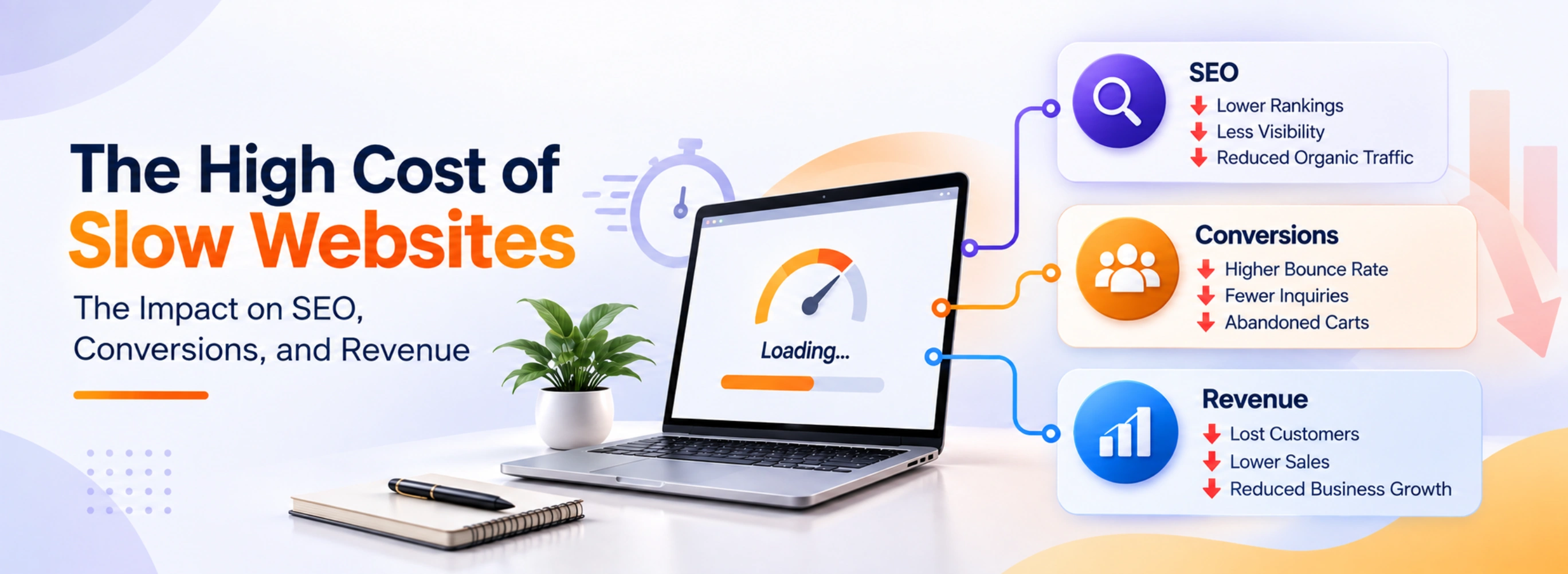
A high-converting website should have clear navigation, strong calls to action, mobile responsiveness, fast loading times, relevant content, trust signals, simple inquiry forms, and an easy-to-use interface. These elements help visitors find information and take meaningful actions.
Why is website maintenance important after development?
Website maintenance helps keep a site secure, functional, accurate, and up to date. Regular updates, backups, security checks, performance monitoring, content changes, and technical fixes can help protect the website and maintain a reliable user experience.
How can website optimization improve a business website?
Website optimization can improve loading performance, mobile usability, technical SEO, page structure, search engine accessibility, and conversion paths. Regular optimization helps ensure that the website continues to support both user needs and business objectives.