


















A customer might find your business through Google, open your website, and leave a minute later. Maybe the pages are slow, the site does not work properly on their phone, or they cannot quickly understand what your company actually does. Having a website is not enough if it makes visitors work too hard to find basic information or contact you.
This is especially relevant for businesses in Pakistan. Before calling a company or making a purchase, many customers now check its website to learn more about its services, compare their options, and get a feel for the business. This applies to startups and SMEs just as much as it does to larger companies.
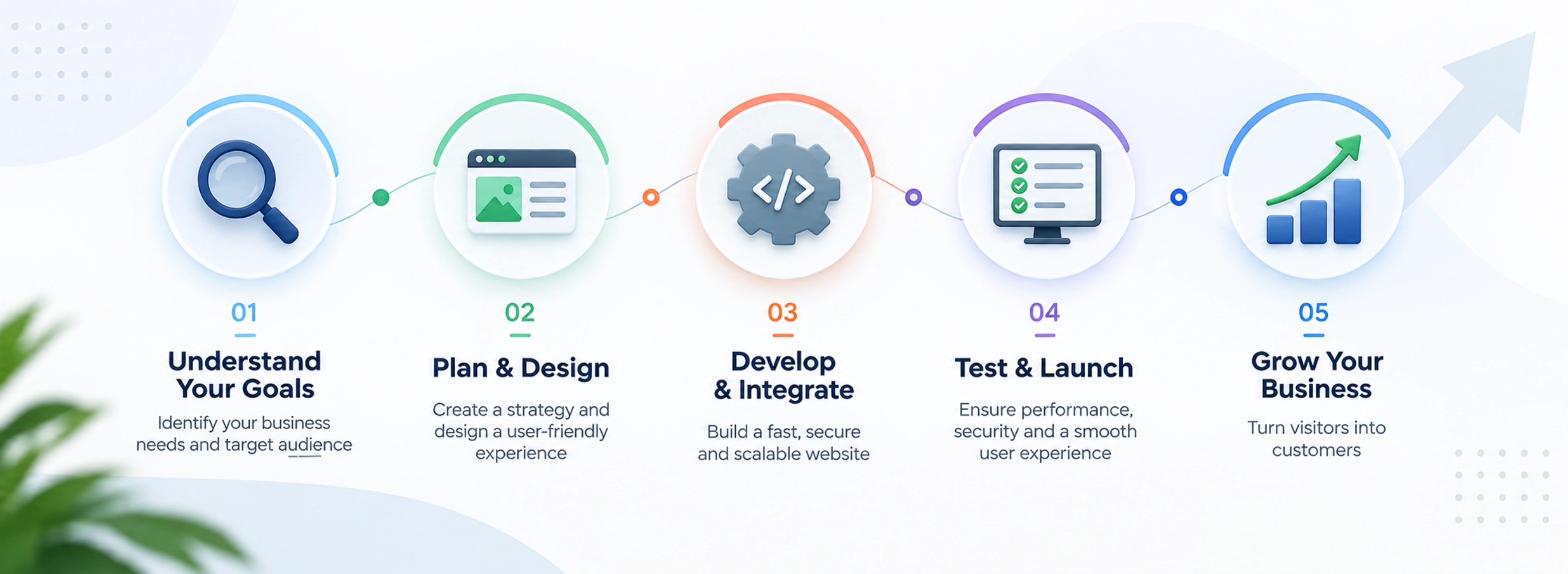
Good website development Pakistan should be based on the needs of the business and the people it wants to reach. Visitors should be able to understand what you offer, find the information they are looking for, and know what to do next. That might mean sending an inquiry, requesting a quotation, booking a consultation, or making a purchase.
There is more involved than simply putting together an attractive layout. The website's content, functionality, speed, user experience, and technical setup all have a part to play.
Key Takeaways
- A business website should do more than provide an online presence; it should support leads, sales, and customer trust.
- Good website design needs to be combined with mobile responsiveness, clear navigation, and strong calls to action.
- Website development cost in Pakistan depends on the website's size, features, design, integrations, and functionality.
- Website optimization helps improve speed, usability, technical SEO, and the overall visitor experience.
- Regular website maintenance keeps the site secure, updated, functional, and aligned with changing business needs.
What Pakistani Businesses Should Expect from Modern Website Development
The way people use business websites has changed. Someone looking for an accounting firm in Lahore, a software company in Karachi, a retailer in Islamabad, or a service provider elsewhere in Pakistan may look at several websites before choosing one. That means your website has to give people a good reason to stay.From online presence to a business growth tool
A well-built website gives customers somewhere to learn about your business without having to call or message you for every detail. It can explain your services, show your products, answer common questions, collect inquiries, and give your sales team useful leads.It helps to settle a few things before development starts:
- What the business wants the website to achieve
- Who the website is intended for
- Which pages and features are actually needed
- What action you want visitors to take
- What content needs to be created
- What SEO requirements need to be considered
There are also some practical considerations for Pakistani audiences. Depending on the business, visitors may prefer contacting you through WhatsApp, calling directly, filling out a short inquiry form, or checking your physical location. If these are important ways for customers to get in touch, they should be easy to find on the website.
The website can also support other marketing efforts. A visitor might arrive through Google, a LinkedIn post, an Instagram campaign, an email, or a paid advertisement. If the page they land on is confusing or difficult to use, the traffic generated by those channels may not turn into enquiries.
So, website development services are not only about building pages. The website should have a clear purpose and fit into the way the business attracts and communicates with customers.
What Makes a Business Website More Likely to Convert Visitors?
A website can look great and still bring in very few enquiries. Good visuals are useful, but they are only one part of the experience.A more useful question to ask during development is what you want visitors to do once they arrive. For one business, that could be requesting a quotation. For another, it could be booking an appointment, calling the office, submitting a form, or buying a product.
Design, usability, and trust need to work together
Good website design Pakistan is not just about colours, fonts, animations, and images. The design should help visitors understand the business and move around the website without getting lost.A high-converting website should:
- Load quickly and work properly
- Be easy to use on mobile devices
- Have simple and clear navigation
- Make important calls to action easy to spot
- Explain products or services clearly
- Keep forms short and relevant
- Include useful trust signals
- Provide helpful, search-friendly content
Navigation is another area where small problems can make a difference. Visitors should not need to open five different pages before they understand what a company offers. A straightforward menu, descriptive headings, and sensible page structure can make the site much easier to use.
Trust matters too. People are naturally more cautious when dealing with a company for the first time. Clear service information, contact details, customer reviews, company information, relevant certifications, and other genuine credentials can help answer some of the questions a new visitor may have.
Then there is the technical side, which visitors may never consciously notice when everything is working properly. Secure forms, responsive layouts, a suitable CMS, and a clean website structure all contribute to a better experience.
The point is not to create a website that looks impressive for its own sake. It should look professional, but it also needs to make sense for the business and make things easier for the people using it.
How Much Does Website Development Cost in Pakistan?
One of the first questions businesses usually have is about cost. There is no useful one-size-fits-all answer because websites can vary considerably in size and complexity.A small company may only need a few pages explaining its services and providing contact details. An e-commerce business may need product listings, customer accounts, payment processing, and inventory-related features. A larger company might require several integrations or custom functionality.
The scope of development determines the investment
The type of website is one of the first things that affects the overall project.| Website Type | Typical Requirements | Factors Affecting Cost |
|---|---|---|
| Business website | Pages, contact forms, service information | Design, number of pages, functionality |
| Corporate website | Multiple sections, integrations, advanced UX | Custom development, integrations, content structure |
| E-commerce website | Product catalogue, cart, checkout | Number of products, payment gateway, integrations |
| Custom web application | Business-specific functionality | Features, complexity, integrations |
Other parts of the project can also change the website development cost in Pakistan.
| Factor | Why It Matters |
|---|---|
| Website size | More pages can require additional design and development work |
| Functionality | Advanced features can make development more complex |
| Custom design | Bespoke designs require more planning and development |
| Integrations | APIs and third-party systems may require additional technical work |
| E-commerce | Products, checkout, payments, and inventory add functionality |
| Maintenance | Ongoing support becomes part of the long-term investment |
A template-based website can be suitable when the requirements are fairly straightforward. A business with specific workflows or a particular user experience in mind may be better served by custom development.
Content should be considered as well. Product descriptions, service pages, images, landing pages, and SEO content all take time to prepare and implement. Leaving them until the end can create delays or result in pages that feel incomplete.
When comparing proposals, businesses should therefore look beyond the number at the bottom of the quotation. Check what is actually included, which features are being developed, whether content and SEO are covered, and what happens after the website goes live.
Instead of asking only, “How much will my website cost?”, it is more useful to ask, “What does my business actually need the website to do?”
How Does Website Optimization Improve Performance and User Experience?
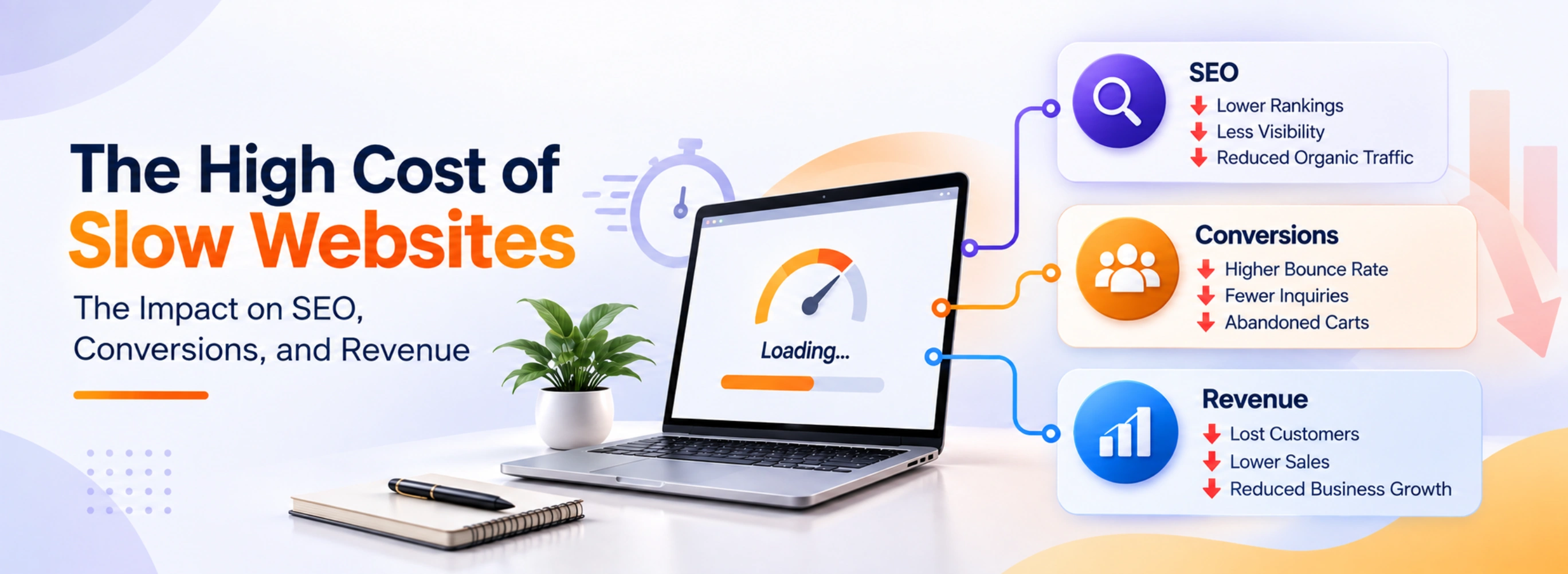
Getting a website live does not mean every problem has been solved. Once real visitors start using it, businesses can find areas that need attention. A page might load slowly on mobile, an important form might be difficult to use, or visitors might not be finding a particular service page. This is where website optimization comes in.Speed, technical SEO, and usability affect business performance
Imagine someone searching for one of your services and landing on the right page. The page takes too long to load, the information is buried under too much text, and the contact form is difficult to complete. They may leave without making an inquiry.Website optimization can cover a number of areas, including:
- Page and mobile loading speed
- Image sizes and media handling
- Code and technical performance
- Technical SEO
- Page structure and internal links
- Search engine accessibility
- Mobile usability
- Calls to action and conversion paths
- Security and performance checks
Performance should not only be checked on a fast office computer. A website can behave differently on a phone or a slower connection, so testing across different devices is useful.
There is also the question of how people move through the site. If a service page gets plenty of visitors but very few enquiries, it is worth looking at that page more closely. Is the contact option easy to find? Does the visitor get enough information? Is the form longer than it needs to be?
What works for one website may not work for another. An online store, for example, may need to pay close attention to product pages and checkout, while a consultancy may be more focused on generating enquiries.
That is why website optimization is better treated as regular website work rather than something that is finished once the site launches. Businesses change, websites change, and customer expectations change with them.
Why Website Maintenance Matters After Your Site Goes Live
The work does not necessarily stop once a website has been launched. Websites need attention over time, just like other business systems.Content becomes outdated, software receives updates, new security issues can appear, and businesses add or change services. Even small technical problems can become frustrating if nobody is keeping an eye on the site.
Treat the website as an ongoing business asset
Regular maintenance may involve:- Updating website software and platforms
- Checking for security issues
- Maintaining backups
- Finding and fixing broken links
- Updating website content
- Checking website performance
- Updating plugins or modules where applicable
- Handling technical problems
- Making SEO improvements
- Reviewing usability and conversion opportunities
Security is another reason to keep up with maintenance. Websites using CMS platforms, plugins, modules, or external integrations may need updates to keep everything working properly and reduce avoidable technical issues.
Maintenance does not mean constantly changing the website. Sometimes the best maintenance work is simply making sure everything continues to work as it should.
For businesses planning website development Pakistan, it is worth thinking about support before the project begins. Find out who will handle updates, technical problems, performance checks, content changes, and improvements after launch.
Aciano Technologies can help businesses across these different stages, including custom website development, web development, UI/UX design, website optimization, SEO and digital growth, and ongoing website maintenance. The focus is on creating websites that fit the business and can continue to develop as its needs change.
A good website is not simply an attractive page that sits online. It needs to be useful, easy to navigate, technically sound, and kept up to date.
For businesses in Pakistan, investing in the right website development approach can give customers a better way to find and understand the business while creating a stronger foundation for enquiries, sales, and future growth.
Frequently Asked Questions
How much does website development cost in Pakistan?
Website development costs vary depending on the number of pages, design requirements, functionality, integrations, e-commerce features, content, SEO, and ongoing support. Businesses should evaluate the scope and deliverables rather than relying on a single standard price.
How long does it take to develop a business website in Pakistan?
The timeline depends on the website's size, complexity, content requirements, custom design, functionality, and approval process. A simple business website generally requires less development time than an e-commerce platform or custom web application.
What should a high-converting business website include?
A high-converting website should have clear navigation, strong calls to action, mobile responsiveness, fast loading times, relevant content, trust signals, simple inquiry forms, and an easy-to-use interface. These elements help visitors find information and take meaningful actions.
Why is website maintenance important after development?
Website maintenance helps keep a site secure, functional, accurate, and up to date. Regular updates, backups, security checks, performance monitoring, content changes, and technical fixes can help protect the website and maintain a reliable user experience.
How can website optimization improve a business website?
Website optimization can improve loading performance, mobile usability, technical SEO, page structure, search engine accessibility, and conversion paths. Regular optimization helps ensure that the website continues to support both user needs and business objectives.